








































What to Know
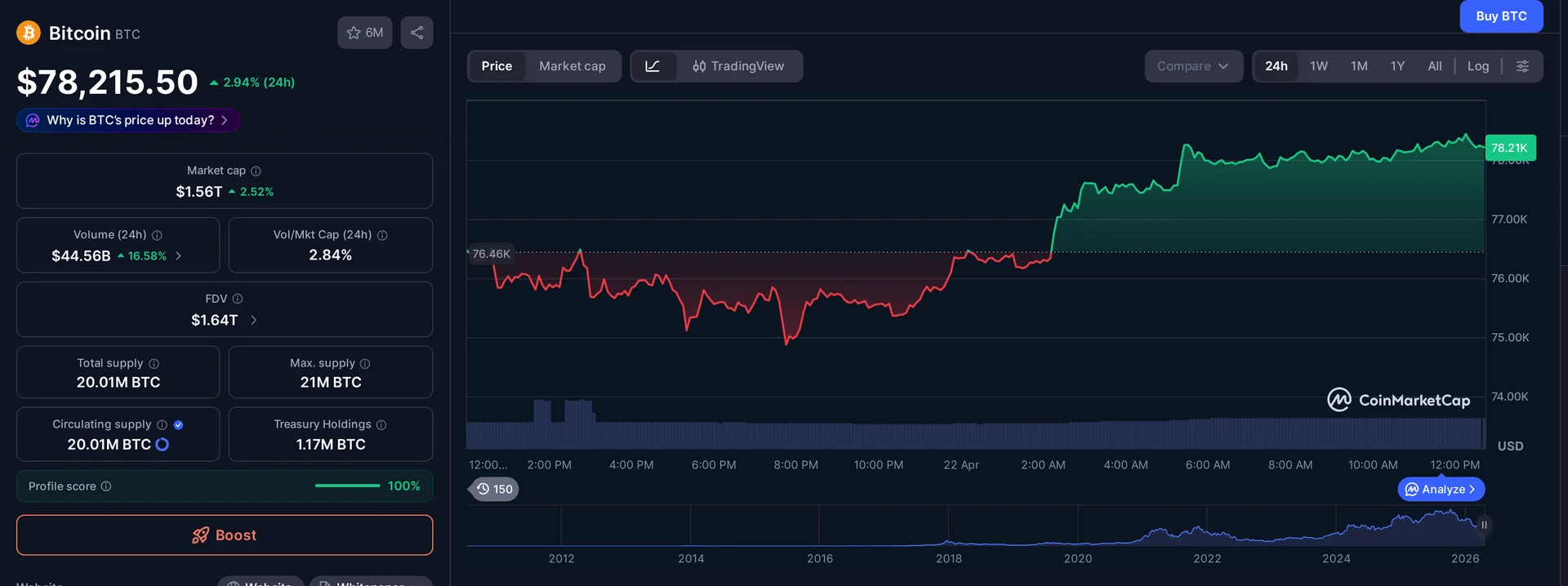
- Bitcoin crossed $78,000 Wednesday, an 11-week high, after Trump extended the Iran ceasefire indefinitely
- Roughly $240 million in used shorts got liquidated as BTC ran up 5% on the week
- Kevin Warsh went before the Senate Banking Committee holding stakes in Solana, Polymarket, and Tenderly
- Kalshi and Polymarket both teased perpetual futures on the same afternoon, with Kalshi going live April 27
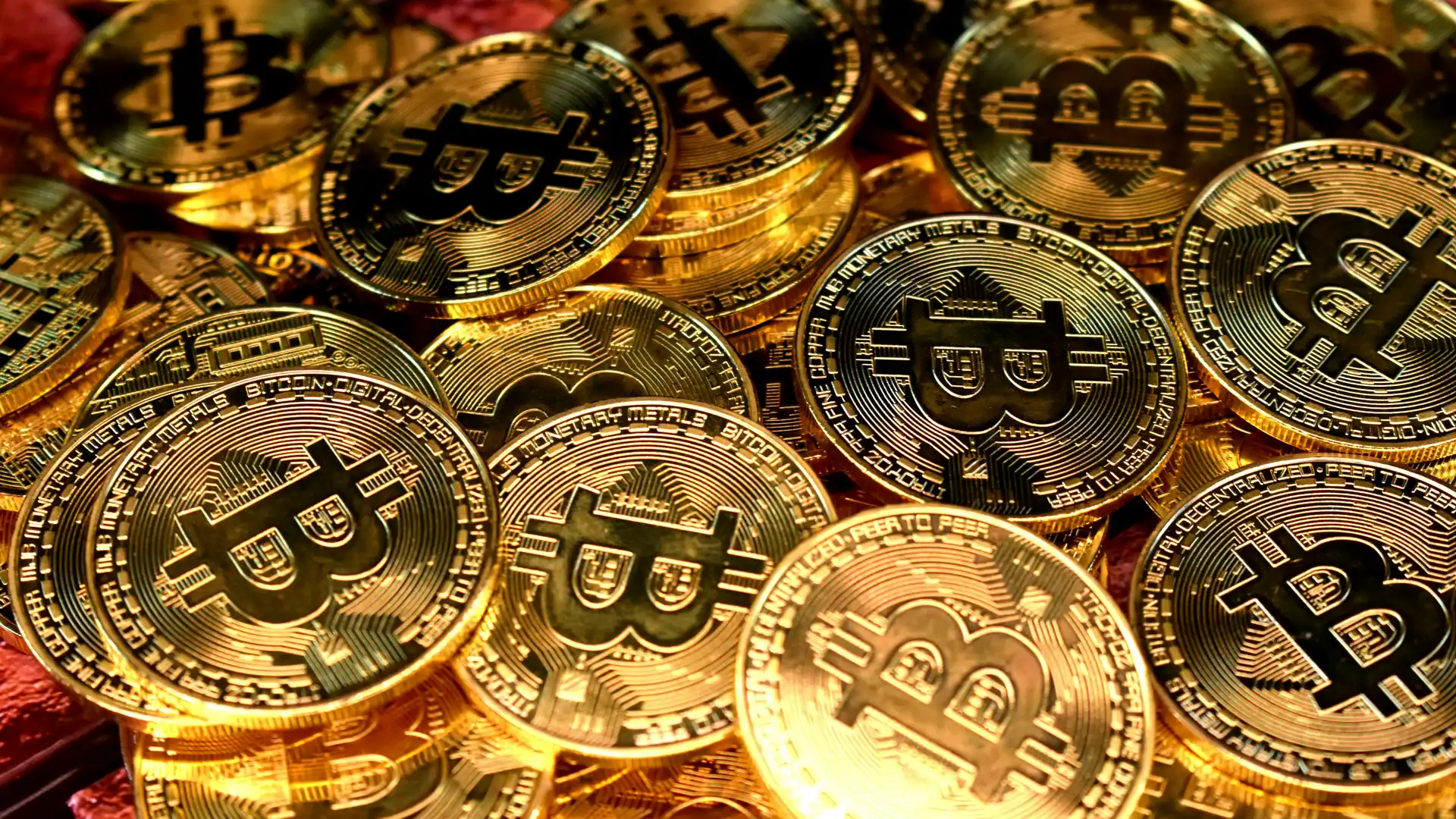
Bitcoin punched through $78,000 on Wednesday morning, its highest print in eleven weeks, and the catalyst was not some clever macro thesis. It was a ceasefire. President Trump said he would extend the Iran truce indefinitely, shorts got torched, and suddenly every screen was green. But the more interesting story sits underneath the price tape. A Fed chair nominee walked into a Senate hearing with a Polymarket stake on his disclosures. Two prediction market giants launched perps on the same afternoon. And Coinbase quietly warned that proof-of-stake may have a bigger quantum problem than anyone wants to admit.
Why Did Bitcoin Jump Past $78,000 on Wednesday?
Short answer, Trump blinked on the Iran expiry. The President said Tehran’s government is fractured and the ceasefire holds until Iran’s leadership submits a unified proposal to end the war. Risk assets read that as green light. Bitcoin climbed roughly 2.2% over 24 hours and 5% on the week, hitting an eleven-week high.
The move caught a lot of traders offside. Roughly $240 million in used shorts were liquidated as price broke through resistance, and that forced buying added fuel to an already constructive tape. Ether tracked the move, up 3% to $2,390 on another day of steady ETF inflows worth about $43 million. Stock futures flipped green too, which tells you this was a broad-based risk-on flush rather than a crypto-specific squeeze.
On-chain signals backed up the price action. Bitcoin’s Net Unrealized Profit/Loss metric flipped positive for the first time since early January. Traders who track that indicator treat the cross as confirmation that the bearish phase has ended. Whales, for what it is worth, have been accumulating at the fastest clip since July 2025. That is a lot of tailwind pointing in the same direction.
Strong momentum starting to build for crypto’s flagship asset.
Kevin Warsh Brings a Crypto Portfolio to the Senate Banking Committee
Kevin Warsh sat for his Fed chair confirmation hearing on Tuesday, and the room was not exactly warm. Senators drilled him on three fronts. His relationship with Trump on interest rates. His broader monetary policy views. And his financial disclosures, which include stakes in Solana, Polymarket, Tenderly, and a handful of other crypto and DeFi funds.
Markets did not love the tone. Warsh came off hawkish on lagging data, crypto equities took it on the chin, and COIN fell 6% while HOOD dropped 4.5%. BTC briefly slid toward $75,000 before the ceasefire headline rescued it. The knee-jerk read was that Warsh would tighten, not ease.
That read may be too short-term. Warsh has spent years publicly arguing the Fed keeps rates too high based on stale data, and his direct exposure to digital assets is not cosmetic. He has described bitcoin as the new gold for people under 40. On paper he would be the most crypto-friendly Fed Chair nominee in history, full stop.
Matt Mena of 21Shares pushed back on the bearish interpretation, arguing the market misread the hearing and that Warsh’s track record points to cuts in the second half of 2026. If those cuts arrive, the liquidity backdrop pushes Bitcoin back toward $100,000 fast. That is the bull case nobody on the floor was pricing in on Tuesday afternoon.
- Warsh disclosed stakes in Solana, Polymarket, Tenderly, and additional crypto and DeFi funds
- He has called bitcoin the new gold for people under 40
- 21Shares strategist sees rate cuts in H2 2026 as a potential path back to $100K BTC
Coinbase Warns Proof-of-Stake Has a Bigger Quantum Problem Than Bitcoin
Coinbase’s Independent Advisory Board dropped a quantum risk report on Tuesday, and the takeaway got buried under the BIP-361 chatter. The board flagged a concern that arguably matters more than wallet-level exposure. Proof-of-stake chains, specifically Ethereum and Solana, face an additional attack surface at the consensus layer itself.
Here is the mechanics in plain terms. PoS networks use cryptographic signatures to secure validator consensus. A sufficiently powerful quantum computer running Shor’s algorithm could break those signature schemes. On Bitcoin, the quantum risk is mostly about exposed public keys on old addresses. On Ethereum and Solana, the risk is the core protocol.
Compromise a third of Ethereum’s validators and the network cannot finalize transactions. Compromise two-thirds and an attacker can rewrite chain history. That is not a wallet upgrade problem. That is a redesign-the-engine problem, and the board said so directly, arguing parts of the core consensus mechanism itself may need to be rebuilt.
Nobody is firing up a cryptographically relevant quantum computer this week. But the harvest now, decrypt later threat is real. State actors can capture encrypted traffic today, sit on it, and crack it once the hardware catches up. Which is why the board framed the planning window as now, not Q-Day.
The challenge for proof-of-stake isn’t just upgrading wallets; parts of the core consensus mechanism itself may need to be redesigned.
Kalshi and Polymarket Launch Perps in Lockstep
On Tuesday, Kalshi announced it is launching perpetual futures across crypto and other assets. By that same afternoon, Polymarket said the same thing, with a tagline about pricing the future and now letting you trade it. Even the hype videos looked suspiciously similar. Call it coincidence, call it competitive paranoia, but the two prediction market giants moved in perfect sync once again.
Kalshi’s launch is codenamed Timeless, goes live April 27 in New York, and starts with BTC perpetuals collateralized in USD. Kalshi’s edge is regulatory. It holds CFTC licenses and a margin trading approval it secured just last month, which gives it a cleaner path through US compliance than most offshore venues ever get.
Polymarket is taking waitlist signups at polymarket.com/perps and teasing perps on assets like BTC, NVDA, and gold with up to 10x use. That is a wider product surface out of the gate, but without the CFTC letter that Kalshi is waving around. The two are sprinting at the same prize from different corners of the regulatory map.
The timing is the interesting part. CME and Hyperliquid are leaning into prediction markets at the exact moment Kalshi and Polymarket are leaning into perps. Everyone wants to own both sides of the bet. Who blinks first decides whether prediction markets stay a distinct category or get absorbed into the derivatives stack.
Scammers Demand Bitcoin for Fake Strait of Hormuz Passage
Nobody had this one on the bingo card. Greek maritime risk firm MARISKS warned on Monday that unknown actors posing as Iranian authorities have been contacting shipping companies stranded west of the Strait of Hormuz, demanding Bitcoin or USDT in exchange for what they are calling transit clearance. The fake messages promise that Iranian Security Services will assess eligibility, and that after the crypto fee lands, the vessel can transit at a pre-agreed time.
MARISKS said it believes at least one vessel actually paid the fraudulent fee. Then got fired on anyway while attempting to cross. The scam is ruthless in its construction because it mirrors a real policy Iran floated back in March, where Tehran proposed charging BTC or USDT transit tolls of roughly $1 per barrel. That policy never materialized, but the shell of it was credible enough for scammers to exploit.
It is a reminder that crypto rails move faster than geopolitical reality. When a state floats the idea of charging tolls in stablecoins, the fraud layer shows up before the policy does. Captains under pressure, shorthanded crews, opaque comms, that is the environment where a plausible-sounding wallet address starts looking like a ticket home.
What This Means for the Next Two Weeks
Put the pieces together and the setup looks unusually loaded. Bitcoin is printing fresh highs on a macro relief rally. A potential Fed chair who owns crypto sat for his hearing. Two prediction market venues just declared war on the perps category. Coinbase is telling Ethereum and Solana that their consensus layer needs a quantum overhaul. That is not a quiet tape.
The near-term catalyst stack runs through Kalshi’s April 27 launch, any follow-up from the Senate Banking Committee on Warsh, and the next round of ETF flow data. If BTC holds $75,000 as support and the Warsh hearing narrative flips from hawkish to dovish, the path to $100K opens up without needing a new story.
The bear case is simpler. Iran sends negotiators, the ceasefire holds without drama, and risk assets give back the geopolitical premium. Warsh comes in harder on rates than Mena expects. Perps launches underwhelm. None of those are outside the cone of possibility. But the weight of the signals, on-chain, macro, and structural, is leaning the other way right now.
Frequently Asked Questions
Why did Bitcoin hit $78,000 this week?
Bitcoin crossed $78,000 on Wednesday after President Trump said he would extend the Iran ceasefire indefinitely, reversing an earlier expiration date. The headline triggered a broad risk-on move, liquidated roughly $240 million in used shorts, and pushed BTC to its highest level in eleven weeks.
Who is Kevin Warsh and why does his Fed nomination matter for crypto?
Kevin Warsh is Trump’s nominee to replace Jerome Powell as Federal Reserve chair. His financial disclosures include stakes in Solana, Polymarket, and Tenderly, and he has called bitcoin the new gold for people under 40, making him the most crypto-exposed Fed chair nominee in US history.
How are Kalshi and Polymarket different on perpetual futures?
Kalshi’s Timeless product goes live April 27 in New York with BTC perpetuals collateralized in USD and leans on its CFTC licenses. Polymarket is running an early-access waitlist teasing perps across BTC, NVDA, and gold with up to 10x use, a wider product slate but without Kalshi’s US regulatory cover.
What quantum risk does Coinbase see in Ethereum and Solana?
Coinbase’s advisory board says proof-of-stake chains face quantum exposure at the consensus layer, not just in wallets. A quantum computer running Shor’s algorithm could break validator signatures, and compromising one-third of Ethereum validators halts finality while two-thirds allows chain history to be rewritten.
This article is for informational purposes only and does not constitute investment advice. Every investment and trading decision involves risk. Readers should conduct their own research before making any financial decisions.









The $78k print lines up with the ceasefire headline but I’d want to see whether perp OI on Kalshi actually drew new flow or just cannibalized offshore books before calling it a real regime shift.
perps on a CFTC regulated venue is wild, never thought I’d see the day
Warsh at the Senate is the part nobody is pricing in. If he signals a softer path than Powell the whole risk curve shifts and BTC above 78 starts looking like the floor, not the ceiling.
anyone know if Polymarket’s perps are USDC margined or using their own synthetic? the piece didn’t really spell it out and that changes the counterparty math a lot
Seen this movie before. Geopolitical calm plus new product launches pumping into a Fed narrative shift is basically Q4 2020 with different names. Back then it was CME futures and an election, now it’s Kalshi and a ceasefire. Doesn’t mean it ends the same way but the setup rhymes hard.
Calling it a ceasefire extension is generous given what’s actually on the ground, and pinning a 78k print on that feels like reverse engineering the tape.