







































What to Know
- Apple shipped a security advisory on Wednesday fixing an iOS bug that kept notifications flagged for deletion on the device
- The FBI used the flaw to pull readable previews of Signal messages from an iPhone, even after the app was uninstalled and disappearing messages were switched on
- The case traces back to a July 2025 attack on the Prairieland ICE Detention Facility in Texas, unsealed in federal court this month
- Signal President Meredith Whittaker and Telegram co-founder Pavel Durov both pushed Apple to act after the report broke on April 9
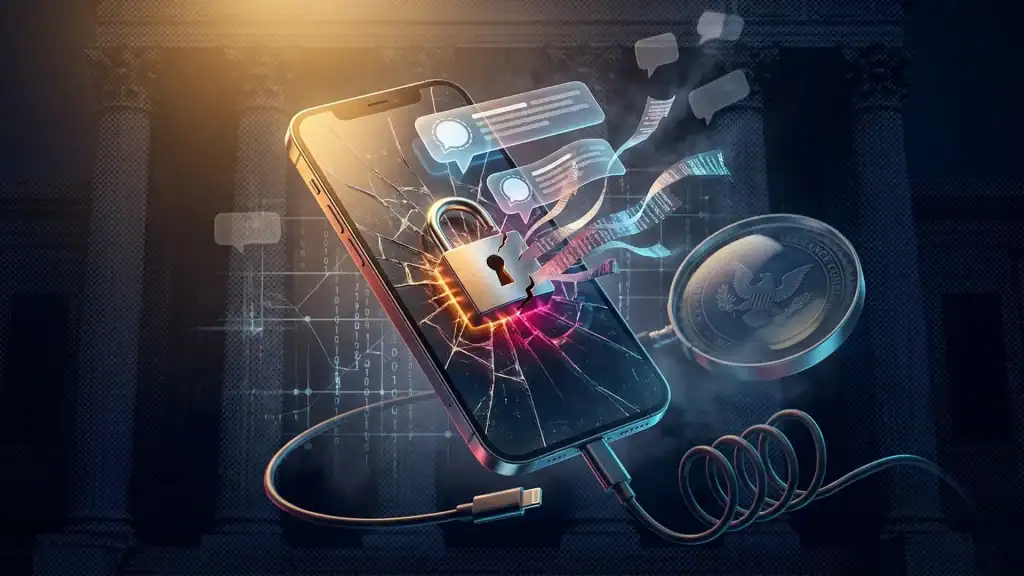
The Apple iOS notification bug that quietly let the FBI reconstruct deleted Signal chats is finally patched, and the fix lands with a lot more baggage than a one-line changelog. Apple confirmed on Wednesday that an earlier version of iOS was retaining notification previews flagged for deletion, which meant a forensic tool connected to an unlocked iPhone could scrape Signal messages that the user believed were gone. The app had been uninstalled. Disappearing messages were on. The receipts were still sitting there anyway.
What Did the Apple iOS Notification Bug Actually Do?
A cache that never cleared
The device kept a shadow copy of incoming message previews in its push notification database long after it should have dumped them. Apple’s Apple iOS notification bug advisory admits notifications “marked for deletion” were “unexpectedly retained on the device.” The OS told the user the notification was gone while quietly holding onto it.
That single oversight sidestepped the entire threat model Signal users rely on. Signal encrypts messages in transit and at rest inside its own app. It cannot control what iOS does with the preview string the operating system generates when a banner pops on your lock screen. Once that preview lands in the notification cache and the cache refuses to clean itself, every message body becomes a forensic breadcrumb waiting for a subpoena and a cable.
The failure mode here matters. This is not a server breach. This is not a weakness in the Signal protocol. This is Apple’s housekeeping code leaking around a product that went out of its way to promise nothing would be retained.
How the FBI Got Into a Defendant’s Signal Chats
The exploit came to light in federal court filings out of Texas, unsealed this month. According to documents first surfaced by 404 Media’s reporting on FBI Signal messages, agents forensically pulled readable Signal message previews off the defendant’s iPhone even though the suspect had deleted the app and set disappearing messages.
The mechanic is almost insultingly simple. The FBI extracted the notification database from a seized device. Inside that database were cached previews, the same ones that briefly appear on the lock screen when a Signal message arrives. Because iOS had held onto them past their expiration, investigators could read them off like plain text. No zero-day, no cooperative backdoor from the app, no cracking end-to-end encryption. Just the operating system quietly failing to take out the trash.
That distinction is the one defenders of platform security keep missing. The FBI did not break Signal. The FBI walked through a door Apple left propped open and picked up a stack of messages off the hallway floor.
Notifications for deleted messages shouldn’t remain in any OS notification database.
The Prairieland ICE Detention Facility Case
The underlying prosecution is not a small one. Court records tie the device extraction to last summer’s attack on the Prairieland ICE Detention Facility, where federal prosecutors pursued charges against a group accused of a shooting at the Texas detention site. The Justice Department later secured convictions in the case, and the evidentiary trail for at least one defendant ran straight through that iPhone.
It is worth sitting with what that means for everyone else. The Apple bug was almost certainly present on millions of devices. It was discovered not by a security researcher at an academic conference, not by Apple’s internal team, but by federal prosecutors who were willing to enter forensic methodology into a court filing in a high-profile criminal case. Whatever else you think of the prosecution, that is how the flaw became public. Had the filing stayed sealed, the cache quite possibly keeps leaking.
There is no public accounting of how many other cases used the same technique before the patch landed. There should be.
Why This Matters for Crypto Users
Here is where the story stops being about one messaging app and starts being about a risk model a lot of crypto holders carry every day. If you run a self-custody wallet, a trading desk, or a validator, Signal is very likely your day-to-day comms channel. You send seed phrase fragments, multisig approvals, OTC trade instructions, and private team coordination through it. You trust the disappearing-message feature to close the window on anything that could be subpoenaed or stolen from a seized device later.
This bug punctures that trust. Every Signal message you sent from an affected iPhone between whenever the flaw shipped and the Wednesday patch could theoretically still be sitting on that device in plain readable form, waiting for the right forensic image. If that phone ever ends up in a courtroom, at a border crossing, or in the hands of a thief with a Cellebrite kit, those messages are not as gone as you thought.
The harder lesson is the one founders and security people keep yelling into the void: operating system hygiene defines the real attack surface, not app-level crypto. You can run Signal, Session, SimpleX, Telegram secret chats, whatever you want. If iOS or Android mishandles a preview string, everything downstream breaks.
- Turn off message preview content in notifications for any sensitive app (Settings, Notifications, your app, Show Previews set to Never)
- Update to the latest iOS build immediately, Apple confirmed the fix ships in this release
- Assume any iPhone that predates the patch has a recoverable cache of old Signal previews and plan accordingly if the device is ever seized or sold
- For wallet operations, keep signing coordination off lock-screen previews entirely
Signal and Telegram Push Back
The reaction from the two highest-profile privacy messaging founders arrived within days. Signal President Meredith Whittaker said in an April 14 post that notifications for deleted messages should never linger in any OS notification store, and publicly pressed Apple to ship a fix fast. Signal said in a subsequent statement that “Apple’s advisory confirmed that the bugs that allowed this to happen have been fixed in the latest iOS release.”
Telegram co-founder Pavel Durov took a different angle. In an April 14 Telegram post, Durov argued that the only real defense is for the app itself to force notification previews off on both ends of a conversation, rather than trust the operating system to behave. That is a harder product call than it sounds. Turning off previews by default kills the user experience most people actually want. Leaving them on trusts Apple’s notification stack to do what it says on the tin.
Both responses land in the same place from different directions. Neither app can fix this alone. The operating system is the weakest link and has been for years. This is the part that stings.
Apple’s advisory confirmed that the bugs that allowed this to happen have been fixed in the latest iOS release.
What Happens Next?
Three threads are worth watching. First, whether Apple publishes a CVE with a meaningful technical writeup or leaves the advisory at its current one-sentence shrug. Security researchers have been asking for more detail, and so far the company has given the bare minimum. Second, whether defense attorneys in other federal cases start pulling on this same thread. Any conviction that leaned on Signal preview extraction from an iPhone in the affected window is now potentially exposed to a motion to suppress.
Third, and this is the one traders should care about, whether the discovery changes how regulators and exchanges think about custody and comms hygiene. If your compliance team uses Signal on company iPhones, the right question this week is whether any of those devices are still running a pre-patch build, and what happens if one of them gets subpoenaed.
Apple fixed a bug. The fix is live. The trust it cost is going to take longer to rebuild, and every self-custody user running iOS is quietly wondering what else is in that notification cache.
Frequently Asked Questions
What is the Apple iOS notification bug?
The Apple iOS notification bug is a flaw in which notifications marked for deletion stayed stored in the iPhone’s notification database. That let forensic tools pull readable previews of incoming Signal messages off a seized device, even after the app was uninstalled and disappearing messages were switched on.
How did the FBI read deleted Signal messages?
The FBI extracted the notification database from a seized iPhone and found cached previews of Signal messages inside. Because iOS kept those previews past their expiration, agents could read the message bodies directly without breaking Signal’s end-to-end encryption. The technique was disclosed in unsealed Texas federal court filings.
Is Signal itself compromised?
No. Signal’s end-to-end encryption was not broken. The leak happened inside iOS, which retained notification previews Signal had no control over once the operating system generated them. Signal confirmed that Apple’s latest iOS release fixes the underlying bug, and the company said its own app handled its role correctly.
What should iPhone users do now?
Install the latest iOS update, which contains Apple’s fix for the notification retention flaw. Users handling sensitive information should also set Show Previews to Never for messaging apps in notification settings. Any device that predates the patch may still hold recoverable cached previews until it is fully wiped, restored, or updated to the patched build.
This article is for informational purposes only and does not constitute investment advice. Every investment and trading decision involves risk. Readers should conduct their own research before making any financial decisions.













so the notification preview was caching payloads in a way Signal’s disappearing messages didn’t account for? would love to see the actual CVE writeup because ‘notification bug’ is doing a lot of heavy lifting in this headline.
patched April 22 but how long was it exploitable in the wild. that’s the question nobody at Cupertino wants to answer.
signal users been warned for years that endpoint security is the weak link, not the protocol
Reminds me of the 2020 iMessage zero-click stuff Citizen Lab dug up. Same playbook: push the payload through the notification layer, let the OS do the decryption work for you, then scrape before the app ever renders the wipe.
anyone know if this affected iPadOS builds too or just iOS? the advisory I skimmed was vague on that and I’ve got a few devices I need to audit before the weekend.