






































What to Know
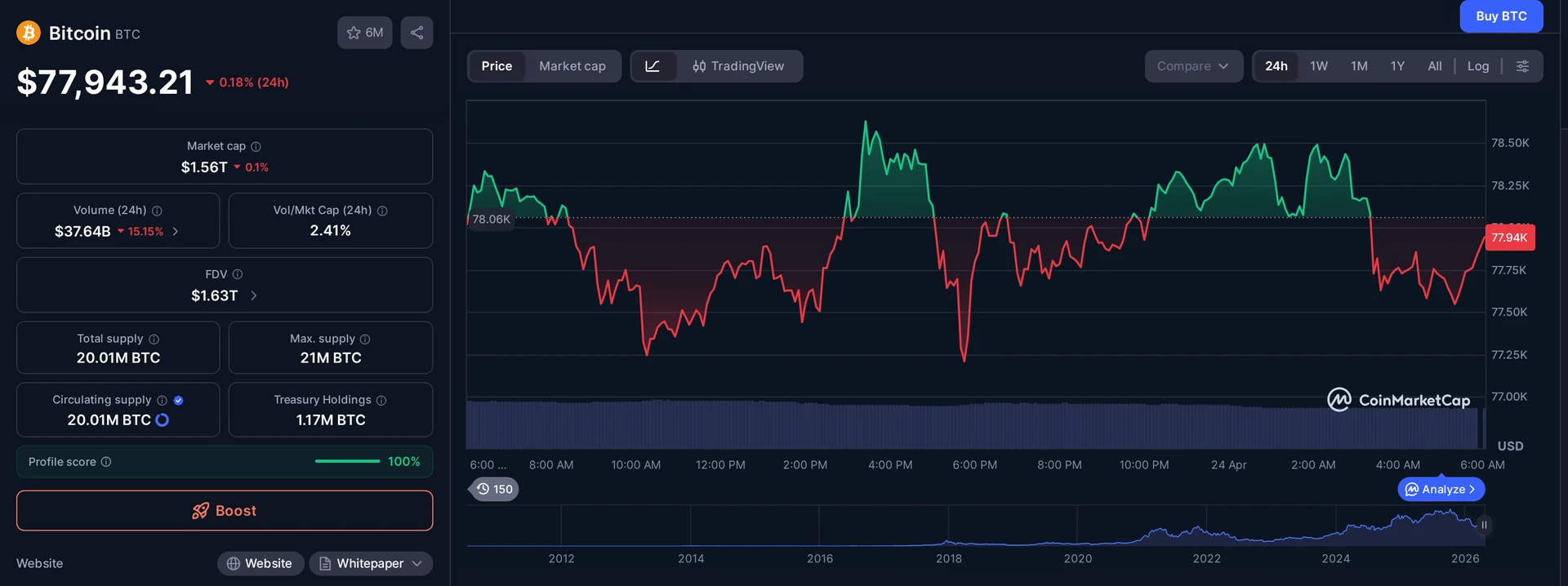
- Bitcoin stuck near $77,800 on Friday after failing to break Thursday’s $78,700 ceiling
- Japan’s core inflation jumped to 1.8% in March, the first acceleration in five months
- WTI crude has rocketed over 40% to $96 since the Iran war started in late February
- Analysts expect the Bank of Japan to stay put next week but flag a June rate hike
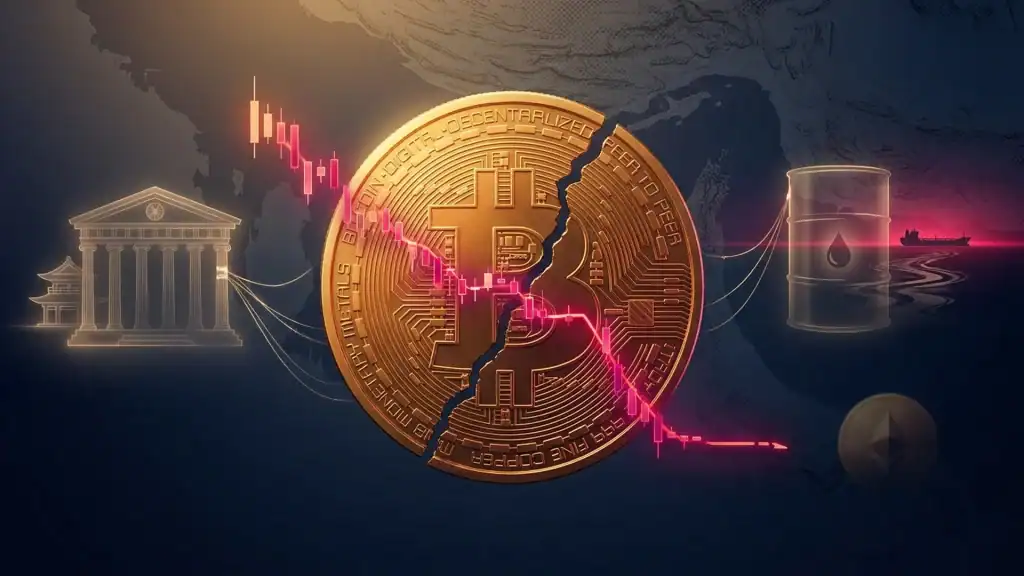
The bitcoin Japan inflation story is back, and it is not a good look for the bulls. Bitcoin was pinned near $77,800 on Friday, unable to clear Thursday’s $78,700 high, as fresh price data out of Tokyo collided with a widening oil shock from the Iran war. Ether traded around $2,300, down 0.8% since midnight UTC, worse than BTC’s softer 0.6% slip. The late-March rally from $65,000 has stopped cold since Wednesday. Traders are no longer asking where the next leg up comes from. They are asking whether the Bank of Japan is about to yank the yen carry trade out from under them.
Why Is the Bitcoin Japan Inflation Trade Stalling Near $77,800?
Short answer: two macro storms hit the same week. Japan printed hot inflation numbers on Friday, and Iran dropped more naval mines into the world’s most important oil chokepoint. Neither is a crypto story on its own. Stacked together, they kill risk appetite.
Bitcoin’s price action tells the tape. Six straight sessions of lower highs. Volume drying up into each bounce. The kind of quiet that usually breaks hard in one direction, and traders are not betting it breaks up. According to reporting on bitcoin Japan inflation dynamics, the cautious tone across crypto this week lines up almost perfectly with the release of Tokyo’s March price data and fresh headlines out of the Strait of Hormuz.
Ether looks worse. At $2,300 it is underperforming BTC on a week where nothing particularly ether-specific went wrong. That is the canary. When ETH bleeds faster than BTC on a macro day, it usually means used longs across the alt complex are being flushed. Positioning, not fundamentals.
The Bank of Japan looks set to hold fire next week but deliver a pointed warning that rates are heading higher, with June firmly in play as war-driven inflation risks build.
Japan’s Inflation Numbers Break a Five-Month Trend
The Japanese data was not a huge miss on paper. It was the shape of it. Core inflation hit 1.8% in March, up from 1.6% in February, the first acceleration in five months. Headline inflation ticked to 1.5% from 1.3%, still shy of the BOJ’s 2% target for a second month running. Core-core inflation, which strips out fresh food and energy, eased to 2.4%, the lowest since October 2024.
Then came the sharper number. The Corporate Service Price Index rose 3.1% year-on-year in March, above the 3.0% forecast. Services pricing is the sticky kind. When CSPI runs hot, central bankers pay attention because it signals that wage pressure is working its way through the economy in the places monetary policy cares about most.
Details on Japan core inflation confirm the same picture. Below-target headline reading, but the underlying trend is finally turning the way BOJ Governor Kazuo Ueda has been waiting for. The uptick also lines up with rising imported energy costs from the Middle East, which means the next CPI print could run even hotter.
- Core CPI: 1.8% (prev 1.6%), first acceleration in 5 months
- Headline CPI: 1.5% (prev 1.3%), still under the 2% target
- Core-core CPI: 2.4%, the softest reading since October 2024
- CSPI: 3.1% YoY, above the 3.0% consensus
The Strait of Hormuz Is the Real Crypto Story
Here is the part the bullish crypto takes are glossing over. The oil corridor matters more than the CPI print. WTI crude has ripped more than 40% to $96 since the Iran war opened in late February. That is not a risk-on setup for any asset class, and crypto is no longer the outlier it used to be during oil shocks.
Reporting on the Strait of Hormuz situation says Iran has laid additional naval mines in the corridor this week. Shipping volume through the strait, which carries 20% of the world’s seaborne oil, has fallen sharply. The Pentagon told lawmakers that clearing the mines would take at least six months, and the clock does not start until the war ends.
The knock-on effect on US monetary policy is the one traders should be watching. The Pentagon briefing also warned that US inflation could stay elevated all year, which makes it harder for the Federal Reserve to cut rates. Higher-for-longer is the exact scenario bitcoin spent most of 2025 trying to shake off.
It would take at least six months to clear mines in the Strait, with the process only beginning after the war ends.
What a Hawkish Bank of Japan Means for Risk Assets
Now add the yen angle. The consensus read on a Bank of Japan hawkish pivot at next week’s meeting is that Ueda holds rates flat but shifts the language to flag a June hike. That is a small policy move with a massive positioning consequence.
Speculative positioning in the yen is currently bearish, according to the latest CFTC data. That means a hawkish BOJ surprise has a clean path to a sharp yen squeeze. The yen has been the single cheapest funding currency in the world for close to a decade. Hedge funds borrow yen, convert to dollars, and pile into US tech, emerging markets, and yes, crypto.
Unwind that trade and you do not get a gentle rotation. You get forced selling across risk assets at the same time, because everyone funded the same way. August 2024 was the last warning shot, and BTC dumped almost 20% in a week when the yen squeezed. Nobody is pricing a repeat right now, which is exactly why it is worth watching.
If Ueda goes full hawkish at the press conference, expect two things. First, a spike in USD/JPY volatility. Second, a second leg down in risk assets as carry unwinds hit the tape. BTC’s current chop near $77,800 would not be the floor in that case. It would be the warning.
What Happens Next for Bitcoin and Ether?
The setup into next week is ugly in a specific way. BTC needs to reclaim $78,700 to reopen a path back to the late-March breakout. Failing there puts a retest of $73,000 on the board, and if the BOJ surprises hawkish on the same day Hormuz headlines get worse, that level probably does not hold on the first touch.
Ether bulls have an even narrower window. With ETH at $2,300 and already underperforming, a BTC break lower almost certainly drags ETH toward $2,100 on the same move. The silver lining for long-term holders: none of this is about crypto fundamentals. The networks are fine. The problem is that macro is louder than fundamentals right now.
One more thing to watch. If oil keeps climbing past $100 WTI, the Fed’s rate-cut path shifts again. Fed funds futures have already trimmed the odds of a June cut, and a sustained oil-driven CPI print would probably kill the cut entirely. Bitcoin has historically lost its footing every time the cut path gets pushed out by more than one meeting. That is the line in the sand.
- BTC key upside level: $78,700 (Thursday high)
- BTC downside retest: $73,000 if Hormuz worsens or BOJ surprises
- ETH downside target: $2,100 on macro flush
- Macro wildcard: WTI crude holding above $100
Is the March to November Bull Case Dead?
Not yet. Call it wounded, not dead. The structural case for bitcoin, spot ETF flows, sovereign accumulation, the post-halving supply squeeze, has not changed. What changed this week is the timing. A macro regime where Japan tightens while the Middle East burns is not the regime bitcoin rallies in. It is the regime bitcoin survives.
The honest read is that bulls need one of three things to go right. Either the BOJ stays dovish next week, or Iran tensions de-escalate, or US inflation prints cool enough to put a June Fed cut back on the table. One out of three is probably enough to stop the bleeding. Two out of three puts BTC back at $85,000. Zero out of three, and the late-March lows come back into play fast.
For now, the tape is telling you to respect the chop. Bitcoin at $77,800 on a Friday with two active macro storms is not a buy signal. It is a wait signal.
Frequently Asked Questions
Why is bitcoin stalling this week?
Bitcoin is stalling near $77,800 because two macro shocks landed at the same time. Japan reported hotter core inflation at 1.8% and Iran laid fresh naval mines in the Strait of Hormuz, pushing WTI crude above $96 and triggering broad risk aversion across stocks, currencies and crypto markets.
What is the Bank of Japan expected to do next week?
The Bank of Japan is expected to hold rates steady at its next meeting but deliver a hawkish signal pointing to a June hike. Analysts at InvestingLive say war-driven inflation risks are strengthening the case for tightening, which could trigger a sharp yen rally and unwind global carry trades.
How does the Strait of Hormuz affect bitcoin?
The Strait of Hormuz carries 20% of seaborne oil, so disruptions spike crude prices and lift global inflation. Higher inflation pushes central banks to keep rates high, which weakens risk assets including bitcoin. WTI has already climbed over 40% to $96 since the Iran war started in late February.
What bitcoin price levels matter now?
Bitcoin needs to reclaim Thursday’s $78,700 high to restart the late-March uptrend. A failure there opens a retest of $73,000, and if the Bank of Japan surprises hawkish while Hormuz headlines worsen, that level could break. Ether support sits near $2,100 on any broader macro flush.
This article is for informational purposes only and does not constitute investment advice. Every investment and trading decision involves risk. Readers should conduct their own research before making any financial decisions.