








































What to Know
- 8,500 ETH per day net entry flow flipped the validator queue positive on April 21, ending a six-month exodus
- BitMine now holds 4,976,485 ETH (4.12% of supply), with 67% staked and 101,627 ETH added last week alone
- Ether trades near $2,417, up 27% off the $1,940 April low, with $2,463 as the level bulls must reclaim
- The Pectra upgrade and EIP-7251 raised max validator balance from 32 ETH to 2,048 ETH, unlocking institutional staking at scale
The bearish ethereum price prediction everyone was selling three weeks ago just ran into a wall of on-chain data that nobody can spin. On April 21, 2026, Ethereum’s validator entry queue flipped net positive for the first time in six months, ending a slow drain that pulled roughly 2.1 million ETH out of staking contracts since the fall of 2025. That is not a narrative. That is a supply signal, and it is the kind of signal that quants build models around.
Why the Ethereum Staking Queue Flip Actually Matters
Here is the short version. For six straight months, more validators were leaving the beacon chain than joining it. Every rally ran into sellers because roughly 2.1 million ETH was trickling back into the liquid float, and every bid got met with a wall of unstaked coin looking for an exit. That dynamic just reversed.
Entries now outpace exits by roughly 8,500 ETH per day, and the slope is getting steeper, not flatter. Post-Merge cycle data shows a 30 to 90 day lag between a queue direction change of this size and the price response, because supply coming off the market takes weeks to actually tighten the circulating float. Translation: the price move has not even started yet. The setup is what is moving first. You can track the live flows on the validator queue tracker, which is the canonical primary source desks are now refreshing every morning.
When staking queues flip direction at this scale, the history of post-Merge cycles shows a 30 to 90 day lag before the price response hits.
BitMine Is the Single Biggest Reason the Queue Flipped
Credit where it belongs. This flip is not a diffuse retail phenomenon. It has a name, and the name is BitMine Immersion Technologies. The company added 101,627 ETH last week, its largest single-week purchase of 2026, and pushed most of that stack into staking contracts. BitMine’s April 20 treasury announcement confirmed the total haul, and the numbers are not small.
BitMine’s treasury now sits at 4,976,485 ETH. That is 4.12% of the entire 120.7 million token supply held by one corporate balance sheet, and 67% of that position is actively staked. A single company is now the dominant vote in this week’s positive queue print. If you want to argue the flip is sustainable, you are really arguing that BitMine keeps buying. If you want to argue it is not, you are arguing the opposite. Everything else is secondary.
- 4,976,485 ETH total treasury (4.12% of circulating supply)
- 101,627 ETH added in the single week ending April 20
- 67% of the stack actively staked through MAVAN
- $12.9 billion total crypto and cash holdings disclosed
What Is MAVAN and Why Does It Matter for Ethereum Price Prediction?
MAVAN is short for Made in America Validator Network, and it is BitMine’s proprietary staking rail. In plain English, it is the plumbing that lets a public company park billions in ETH into validators without drowning in operational complexity. BitMine’s MAVAN launch announcement spelled out the thesis earlier this year, and the queue data is the first real-world readout on whether the thesis holds.
It holds. MAVAN is the first institutional-grade expression of the post-Pectra architecture, and it just did the thing it was designed to do: absorb a hundred-thousand-ETH buy in a single week and convert it into staked supply without a hiccup. Other treasuries are watching. If MAVAN becomes a template, the next twelve months of ethereum price prediction work needs to price in a structural bid that nobody modeled six months ago.
How Pectra and EIP-7251 Made the Flip Possible
None of this works without the protocol change that shipped in May 2025. The Pectra upgrade roadmap bundled a set of EIPs that collectively turned institutional staking from a logistical nightmare into a product line. The headline piece is EIP-7251, which raised the maximum validator effective balance from 32 ETH to 2,048 ETH.
That is a 64x increase in how much ETH a single validator can hold. For a retail staker, it changes nothing. For a corporate treasury trying to park four million ETH, it is the difference between running hundreds of thousands of validator instances and running thousands. Pectra cut the operational surface area by an order of magnitude, and it turned scale from a penalty into a feature. BitMine is the first company to translate that protocol change into a treasury strategy. It will not be the last.
Ethereum Price Prediction: The Three Levels Every Desk Is Watching
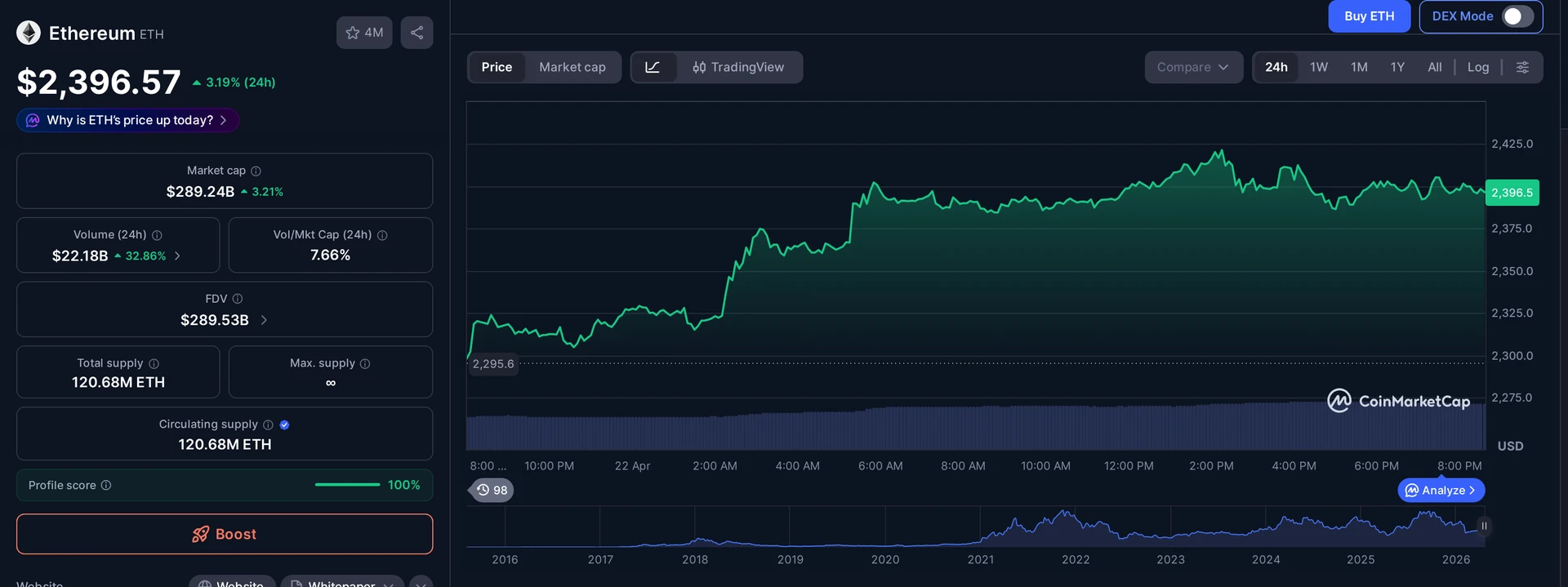
Ether is trading near $2,417 into the queue flip, up 27% off the $1,940 April low. The chart is sitting at a decision point, and every sell-side ethereum price prediction note right now is tracking the same three levels.
Resistance is $2,463, the recent swing high. Reclaim that cleanly and the downtrend is done. First support is $2,300, which is where BitMine stacked its most recent tranche. That is not a coincidence. Institutions with conviction bid into support zones, and the $2,300 level is now a visible accumulation shelf. Critical support is $1,940, the April low where the current leg started. Lose that and the queue data becomes noise. The bear case kicks back in immediately.
- $2,463: recent swing high, the reclaim level for a confirmed trend change
- $2,300: first support, BitMine’s most recent accumulation zone
- $1,940: critical support, the April low, the line the bull case cannot afford to lose
The Supply Shock Setup Nobody Is Pricing Yet
Think about what just happened in context. Six months of net exit flow pushed 2.1 million ETH back into circulation. That supply has largely been absorbed now, because price held and grinded higher even into the teeth of validator churn. With the queue flipping positive, the next 90 days pull ETH the other direction. Coin goes into validators. Liquid float shrinks. ETF desks, market makers, and corporate treasuries are all fishing the same shallower pond.
A positive queue at this stage of the cycle has historically preceded a supply shock. The question is not whether the shock happens. The question is whether it lands before June or drags into Q3. Either way, every ethereum price prediction running on pre-flip assumptions just went stale.
Call it what it is. The bears had six months to make their case and the chart cooperated. That window just closed.
Frequently Asked Questions
What does the Ethereum staking queue flipping positive mean?
It means more validators are entering the staking contract than leaving it. On April 21, 2026, net entries outpaced exits by roughly 8,500 ETH per day for the first time in six months. That reverses a trend that drained 2.1 million ETH back into liquid circulation and removes overhead supply from rallies.
How does BitMine's 4.97 million ETH treasury affect Ethereum price prediction?
BitMine holds 4,976,485 ETH, which is 4.12% of the 120.7 million token supply, with 67% actively staked. The company added 101,627 ETH last week alone. That single corporate actor is the dominant driver of the positive queue flip and is a structural bid that price prediction models built before 2026 did not account for.
What is EIP-7251 and why does it matter?
EIP-7251 is the Pectra-era Ethereum change that raised the maximum validator effective balance from 32 ETH to 2,048 ETH. That is a 64x increase per validator. The change turned large-scale institutional staking from a logistical burden into a product, enabling treasuries like BitMine to stake billions of dollars in ETH efficiently.
What price levels should Ethereum traders watch after the queue flip?
Three levels matter. Resistance sits at $2,463, the recent swing high that bulls need to reclaim. First support is $2,300, BitMine’s recent accumulation zone. Critical support is $1,940, the April low where the current uptrend began. ETH is trading near $2,417, up 27% from the April bottom.
This article is for informational purposes only and does not constitute investment advice. Every investment and trading decision involves risk. Readers should conduct their own research before making any financial decisions.

















queue flipping positive after six months of net exits is the part worth watching, but is that inflow driven by BitMine accumulation alone or are we seeing smaller validators returning too? the distinction matters a lot for decentralization math
bullish framing feels premature. one day of positive queue flow doesn’t undo six months of exodus, and ETH is still underperforming BTC on every timeframe that matters
finally some green shoots on the validator side
4.97M ETH under one entity is wild concentration. anyone know the breakdown between their staked portion and what sits liquid on the balance sheet? would change how I read the queue signal