







































What to Know
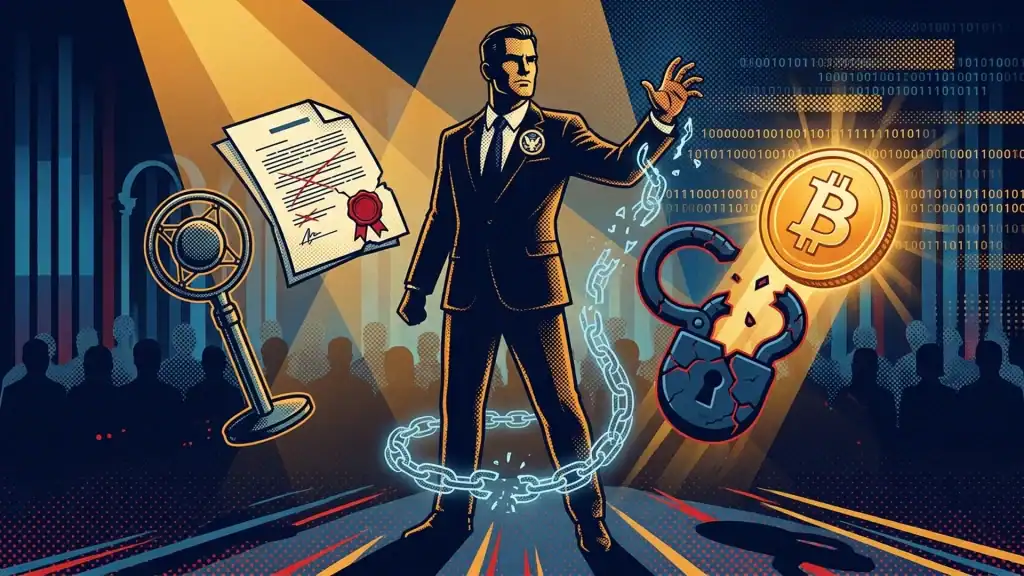
- FBI Director Kash Patel will headline a Bitcoin 2026 panel titled Code Is Free Speech: Ending The War On Bitcoin.
- The session pairs Patel with Deputy Attorney General Todd Blanche and Coinbase Chief Legal Officer Paul Grewal.
- Bitcoin 2026 runs April 27 to 29 at The Venetian in Las Vegas, with more than 500 speakers confirmed.
- Patel has disclosed personal exposure to Bitcoin ETFs and miner Core Scientific, a first for a sitting FBI director.
Kash Patel Bitcoin 2026 just became the most-watched panel of the year. The FBI Director will take the stage in Las Vegas next week to argue that the federal government has spent a decade prosecuting the wrong people. The panel is called Code Is Free Speech: Ending The War On Bitcoin, and the title does not leave much room for interpretation. Patel will sit alongside Deputy Attorney General Todd Blanche and Coinbase Chief Legal Officer Paul Grewal. Three people who a year ago would have been on opposite sides of a courtroom.
How Kash Patel Bitcoin 2026 Became the Panel No One Expected
Rewind to the last administration. The FBI was raiding Samourai Wallet developers. The DOJ had a dedicated National Cryptocurrency Enforcement Team. Coinbase was getting Wells notices. Now those same offices are sending their top brass to a Bitcoin conference to talk about rolling the whole thing back.
The Kash Patel Bitcoin 2026 announcement landed on X this week and the Bitcoin community reacted the way you would expect. Half celebration, half disbelief. For a sector that spent the Biden years dodging subpoenas, watching the FBI director share a stage with Coinbase’s top lawyer is not subtle. It is a signal flare.
The panel title itself is the tell. Code Is Free Speech is not a policy slogan. It is a legal argument that Bitcoin developers, privacy-tool authors, and open-source contributors have been making in federal court for years, mostly while losing. If Patel and Blanche are endorsing that framing in front of 30,000 attendees, the Justice Department’s posture on software has shifted more than any press release has admitted.
Code Is Free Speech: Ending The War On Bitcoin.
Who Exactly Is Kash Patel on This Issue?
Patel is not a crypto-native figure. He came up through national security and intelligence oversight. But since his Senate confirmation, his financial disclosures have raised eyebrows for a reason most sitting FBI directors never have to think about. He owns Bitcoin ETFs. He owns stock in the mining company Core Scientific.
That is unusual. Previous bureau directors have generally held index funds and Treasury-heavy portfolios. The FBI Director Kash Patel confirmation vote in February 2025 passed narrowly, and his subsequent filings put him in a category of one: the first head of the bureau with direct personal exposure to the asset class his agency has spent the better part of a decade policing.
Ethicists have opinions about that, and they are worth reading. But for Bitcoin holders watching this play out, the calculus is simpler. A director who owns BTC exposure is not going to greenlight raids on self-custody wallets. He has a conflict and he has a position, and both of them point in the same direction.
- Confirmed as FBI Director by Senate vote in February 2025
- Disclosed personal holdings in spot Bitcoin ETFs
- Disclosed equity position in Core Scientific, a publicly traded Bitcoin miner
- First sitting FBI director with direct Bitcoin-adjacent exposure on record
Why Is Todd Blanche on This Panel?
Blanche is the answer to that question. The Deputy Attorney General spent April 2025 doing something no DOJ number two had done before: he ordered federal prosecutors to stop going after cryptocurrency mixers as a category. The memo disbanded the National Cryptocurrency Enforcement Team and redirected resources toward fraud and narcotics cases that happened to involve crypto, rather than crypto itself.
Read the Reuters coverage of the Todd Blanche crypto enforcement memo and the shift is hard to overstate. For the better part of four years, the DOJ treated privacy tooling as a standing indictment waiting to happen. Tornado Cash. Samourai. ChipMixer. Anyone writing code that obscured transaction flow was, in the old framework, one subpoena away from conspiracy charges.
Blanche’s April memo said the quiet part out loud. Writing privacy software is not, by itself, a crime. That is the position civil-liberties groups have argued since 2013. It took a change in administration and a change in deputy AGs to get the DOJ to say it in a memo. Now Blanche is going to say it on stage.
Writing privacy software is not, by itself, a crime. Civil-liberties groups have argued that since 2013. It took 12 years to get it in a DOJ memo.
Paul Grewal and the Industry Side of the Table
Grewal is the third chair and, in some ways, the most interesting one. Before joining Coinbase, he was a U.S. federal magistrate judge for the Northern District of California. Before that, Deputy General Counsel at Facebook. He has sat on all three sides of the modern tech-enforcement triangle: bench, platform, and industry.
In his role as Paul Grewal Coinbase Chief Legal Officer, he has been the person writing the motions, drafting the amicus briefs, and trading letters with the SEC while Coinbase fought for its life during the Gensler era. He is not going on stage to thank the government. He is going on stage because he spent four years arguing the case that is about to become DOJ policy.
His presence also reframes what the panel is. It is not a fireside chat with a compliant industry. It is a post-game debrief between the lawyers who won and the officials who are now implementing what the lawyers argued for. That is a different kind of conversation, and the transcript will be worth reading.
What Will Actually Get Discussed on Stage?
Per the conference announcement, the session covers developer rights, privacy tools, and the evolving enforcement landscape. Translate that out of conference-speak and you get three questions: Can open-source Bitcoin developers stop worrying about knock-and-talks? Are coin mixers off the indictment list for good? And how permanent is any of this if the next administration flips?
The last question is the one nobody on stage will answer directly, but it is the one Bitcoiners should be asking. Executive-branch posture can shift in 90 days. A DOJ memo is not a law. If the Code Is Free Speech framing is going to survive past 2028, it needs to get codified into statute, not just into policy memos. Expect Grewal to push that point. Expect Patel and Blanche to dodge it.
There is also the practical matter of ongoing cases. Samourai Wallet’s developers are still in legal limbo. Roman Storm’s trial over Tornado Cash is still unresolved at the appellate level. Pardons and policy memos do not automatically unwind indictments that are already charged. Someone in the audience will ask. Someone on stage will have to answer.
- Developer liability for publishing privacy-preserving code
- The status of pending cases against mixer and wallet developers
- Whether the April 2025 DOJ memo becomes formal policy or stays discretionary
- How the FBI treats on-chain surveillance requests from foreign partners
The Bigger Picture for Bitcoin Holders
Zoom out. A sitting FBI director appearing at a Bitcoin conference to discuss ending the war on Bitcoin would have been a Babylon Bee headline three years ago. Now it is the undercard at a three-day event at The Venetian with 500 other speakers and a Nakamoto Stage. The Overton window on Bitcoin policy in Washington has moved, and it has moved fast.
For holders, the practical upshot is simple. Self-custody is not going to be criminalized at the federal level for the foreseeable future. Running a node is not a regulatory risk. Using a privacy wallet is not, by itself, going to trigger a visit. The enforcement posture that dominated 2022 to 2024 is being actively dismantled, on stage, in front of cameras.
Whether that sticks past the 2028 election cycle is the open question. But for the next two and a half years, the signal from the top of the Justice Department and the FBI is the opposite of what it was under the last administration. That is worth more than any single piece of legislation, because it changes how prosecutors decide what to charge and what to pass on. Culture eats policy, and the culture just flipped.
Bitcoin 2026 runs April 27 to 29 at The Venetian in Las Vegas. Patel, Blanche, and Grewal share the panel. Expect the room to be packed.
What Happens Next?
The panel itself is one data point. What matters is what comes after. Watch for three things in the 90 days after the conference: a formal DOJ policy document codifying the April 2025 mixer memo, an FBI field-office guidance update on how agents handle on-chain investigations, and movement on the Samourai and Tornado Cash cases still working through the courts.
If those three dominos fall, the Code Is Free Speech framing becomes more than a panel title. It becomes operational policy. If they do not fall, Bitcoin 2026 was a very good PR event and not much else. The difference will be clear by the time Bitcoin 2027 rolls around.
Frequently Asked Questions
Who is speaking on the FBI Director Kash Patel Bitcoin 2026 panel?
The panel, titled Code Is Free Speech: Ending The War On Bitcoin, features FBI Director Kash Patel, Deputy Attorney General Todd Blanche, and Coinbase Chief Legal Officer Paul Grewal. The three-person session focuses on developer rights, privacy tools, and federal enforcement policy toward Bitcoin.
When and where is Bitcoin 2026 taking place?
Bitcoin 2026 runs from April 27 through April 29, 2026, at The Venetian Resort in Las Vegas. The conference includes more than 500 speakers across multiple stages, technical workshops, policy sessions, and beginner-focused Bitcoin education tracks for newcomers to the asset class.
What did Todd Blanche do on crypto enforcement in April 2025?
Deputy Attorney General Todd Blanche issued a memo directing the Department of Justice to stop prosecuting cryptocurrency mixers as a category. The directive disbanded the National Cryptocurrency Enforcement Team and redirected federal resources toward fraud and narcotics cases involving crypto rather than crypto-native targets.
Why does Kash Patel owning Bitcoin ETFs matter?
Patel is the first sitting FBI director to disclose personal holdings in Bitcoin ETFs and Bitcoin miner Core Scientific. The disclosures align his personal financial interests with the Bitcoin industry his agency oversees, a situation ethicists have flagged but that signals a clear policy orientation.
This article is for informational purposes only and does not constitute investment advice. Every investment and trading decision involves risk. Readers should conduct their own research before making any financial decisions.















Patel, Blanche, and Grewal on one panel in Vegas is a serious signal. The Coinbase chief legal angle plus DOJ leadership means this isn’t just conference theater, actual enforcement posture could shift before the next SAB bulletin drops.
ending the crypto war sounds great until you remember every administration says that and then quietly keeps the same choke point playbook running in the background
Bullish. If Patel actually walks back the Operation Chokepoint 2.0 vibes, BTC reclaims 90k easy and alts finally breathe after two years of regulatory suffocation.
Vegas April 27 booked, see everyone there.
Anyone know if the panel is on the main stage or the policy track? Trying to figure out if it’ll be streamed live or gated behind the whale pass like last year.