








































What to Know
- Morgan Stanley, with $9.3 trillion in assets, launched the Stablecoin Reserves Portfolio (MSNXX) on Friday for issuers backing tokens like USDC
- The fund is built to comply with the GENIUS Act, the federal stablecoin framework enacted last year
- Standard Chartered expects the stablecoin market to hit $2 trillion by end of 2028, up from $316 billion today
- Morgan Stanley’s product is off-chain for now, but head of digital-asset strategy Amy Oldenburg called tokenized funds a path forward
The Morgan Stanley Stablecoin Reserves Portfolio landed Friday with one obvious target painted on it: BlackRock. The Wall Street giant, which manages $9.3 trillion in assets, rolled out a money market fund built specifically for stablecoin issuers to park the cash and Treasuries backing their tokens. That is the exact job BlackRock has been quietly running for Circle and a swelling roster of DeFi protocols. Now Morgan Stanley wants in.
Why the Morgan Stanley Stablecoin Reserves Portfolio Is Picking This Fight Now
The timing is not subtle. Stablecoin reserves sit in one of the most boring, most profitable corners of finance, short-duration Treasuries and overnight repo. Whoever custodies those reserves collects the yield spread. For years, BlackRock has been the default choice. Circle alone parks most of its USDC backing inside a BlackRock-run money market product that quietly ballooned into one of the most important vehicles in crypto.
Morgan Stanley looked at that arrangement and decided it wanted a slice. The new fund, ticker MSNXX, trades on days when the New York Stock Exchange is open and invests reserves across cash, U.S. Treasuries, notes, bonds, and certain overnight repurchase agreements backed by liquid assets. The bank described the product as purpose-built for issuers, not retail, and priced accordingly. You can read the details in the bank’s own Stablecoin Reserves Portfolio announcement.
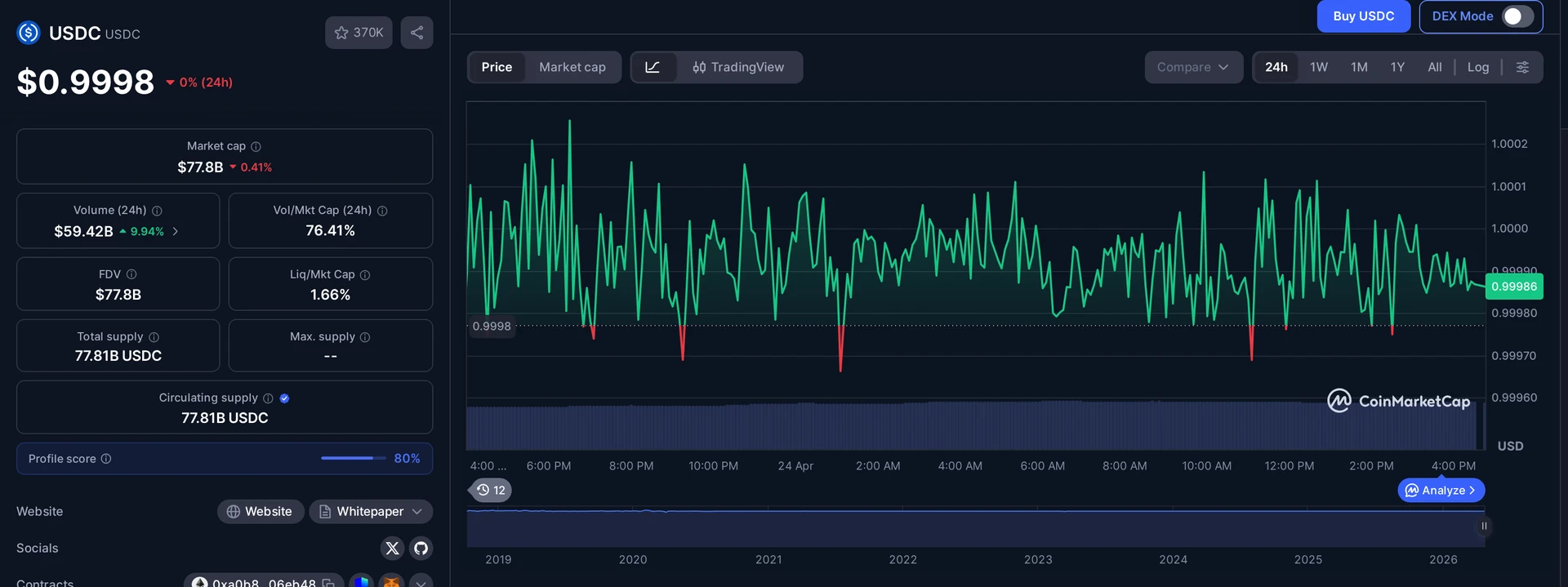
A significant increase in stablecoin issuers as well as the growing number of assets held in stablecoins.
What Does the GENIUS Act Have to Do With It?
Everything. The GENIUS Act, the federal stablecoin framework Congress passed last year, drew a hard line around what issuers can hold to back their tokens. Reserves have to be liquid, they have to be segregated, and they have to be reported. That sounds simple until you try to run it at scale across billions of dollars.
Morgan Stanley says it designed MSNXX to comply with those rules out of the box. That is the pitch to Circle, Paxos, and any issuer that does not want the compliance headache of building its own reserve operation. Hand the cash to Morgan Stanley, let the bank handle Treasury maturities and repo desks, and collect the yield. For smaller issuers especially, outsourcing reserve management to a bank with a century-old trading floor is a lot cheaper than doing it in-house.
The Numbers Behind the Market Morgan Stanley Wants
Stablecoins, as of Friday, were worth $316 billion in aggregate according to CoinGecko. That is already a respectable chunk of the global money supply trapped inside crypto, and every dollar of it sits on top of a pile of real-world assets somebody has to manage. The growth forecasts are what make this a land grab.
Standard Chartered, in a note earlier this year, projected stablecoins would hit $2 trillion by end of 2028. That is roughly 32 months away. If the bank is right, reserve management for stablecoin issuers goes from a niche product line to a multi-hundred-billion-dollar business in under three years. Wall Street has noticed. That is why Morgan Stanley is launching now instead of waiting to see how the market shakes out.
- $316 billion total stablecoin market cap as of April 24
- $2 trillion projected stablecoin market cap by end of 2028 (Standard Chartered)
- $2.5 billion in BlackRock’s tokenized BUIDL fund across nine blockchains
- $173 million in net inflows to Morgan Stanley’s spot Bitcoin ETF in two weeks
BlackRock’s Head Start With BUIDL and Circle
Here is the part Morgan Stanley has to crack. BlackRock is not just managing Circle’s cash through the Circle Reserve Fund, it is also running the most successful tokenized money market fund in crypto. BlackRock BUIDL was valued at $2.5 billion on Friday, according to RWA.xyz, and it is live on nine blockchains. Ethena, the protocol behind the synthetic dollar USDe, uses BUIDL as part of its backing. DeFi treasuries use it for yield. It is a category definer.
Morgan Stanley’s MSNXX, for now, does not trade on-chain. It is a traditional money market fund with a traditional wrapper. That is a meaningful gap in a market where issuers increasingly want composability, programmable settlement, and 24/7 redemption. Amy Oldenburg, who runs digital-asset strategy at the bank, has already said tokenized money market funds are a path forward for the firm’s roadmap. Translation: MSNXX is the opening move, not the finished product.
Who Actually Switches Reserve Managers?
This is the question that decides whether Morgan Stanley’s product matters. Circle is the obvious target, the second-largest stablecoin issuer by market cap and the holder of most of its USDC reserves inside BlackRock’s fund. Getting Circle to move even a slice of reserves into MSNXX would be a statement. But Circle does not have to pick one manager. The practical answer is probably that big issuers diversify, splitting reserves across BlackRock, Morgan Stanley, and maybe a third venue to reduce counterparty risk.
Smaller issuers might be the real prize. Tether does not play in this market. PayPal, Paxos, First Digital, and the next wave of bank-issued stablecoins all need reserve infrastructure that checks the GENIUS Act boxes. Morgan Stanley’s balance sheet and brand make it an easy sell to compliance teams. The pitch is basically: you can tell your regulator the reserves are at Morgan Stanley.
Tokenized money market funds are definitely a path forward.
The Broader Morgan Stanley Crypto Push
The reserve fund is not happening in a vacuum. Earlier this month, Morgan Stanley rolled out a spot Bitcoin ETF, which has already pulled in $173 million in net inflows in a little over two weeks, according to Farside Investors. The bank also has roughly 16,000 financial advisors who can now route clients into that ETF. Add the Stablecoin Reserves Portfolio launched Friday, and the pattern is clear.
Morgan Stanley is building a full crypto stack: retail access through the ETF, wealth advisory distribution, and now institutional infrastructure for issuers. It is the same playbook BlackRock has been executing for three years, just compressed into a few quarters. If you are an issuer picking a reserve manager in 2026, you now have two serious Wall Street options where a year ago you had one. Competition is good. For Circle and its peers, it also means leverage in negotiating fees.
What to Watch From Here
Three things will tell you whether MSNXX is a real threat to BlackRock or a press release product. First, watch for any announcement that an existing large issuer is allocating reserves to Morgan Stanley. Even a small allocation from Circle, Paxos, or a bank-issued stablecoin would signal the market is treating MSNXX as legitimate. Second, watch for Morgan Stanley to confirm a tokenized version. Oldenburg already telegraphed it. The question is when, and which chain.
Third, watch the yield. Reserve managers compete on basis points. If Morgan Stanley prices MSNXX aggressively to win share, BlackRock has to respond. That is good news for issuers and, by extension, for holders of stablecoins whose issuers choose to share some of that yield. The fight over who earns the float on a $2 trillion market has started. Friday was the opening bell.
Frequently Asked Questions
What is the Morgan Stanley Stablecoin Reserves Portfolio?
The Stablecoin Reserves Portfolio, ticker MSNXX, is a money market fund Morgan Stanley launched Friday for stablecoin issuers. It holds cash, U.S. Treasuries, notes, bonds, and overnight repurchase agreements collateralized by liquid assets. The fund is designed to comply with the GENIUS Act reserve rules and trades on NYSE business days.
How does MSNXX compete with BlackRock's Circle Reserve Fund?
Circle parks most of its USDC reserves in the Circle Reserve Fund, a BlackRock-run money market vehicle. MSNXX offers issuers a direct alternative managed by Morgan Stanley, which has $9.3 trillion in assets. Circle and other issuers could split reserves across multiple managers to diversify counterparty risk.
Why does the GENIUS Act matter for stablecoin issuers?
The GENIUS Act, enacted last year, sets federal reserve requirements for stablecoin issuers. Reserves must be liquid, segregated, and reported. Morgan Stanley built MSNXX specifically to meet those rules, letting issuers outsource compliance-heavy reserve management to a bank rather than building it in-house.
Will Morgan Stanley launch a tokenized version of MSNXX?
Amy Oldenburg, Morgan Stanley’s head of digital-asset strategy, has said tokenized money market funds are a path forward for the firm. MSNXX currently does not trade on-chain, unlike BlackRock’s BUIDL, which is live on nine blockchains and valued at $2.5 billion. A tokenized version has not been announced.
This article is for informational purposes only and does not constitute investment advice. Every investment and trading decision involves risk. Readers should conduct their own research before making any financial decisions.