








































What to Know
- Morgan Stanley Investment Management launched the Stablecoin Reserves Portfolio (ticker MSNXX), a government money market fund built specifically for stablecoin issuers.
- The fund holds only U.S. Treasury bills and overnight repurchase agreements, targets a $1 net asset value, and offers daily liquidity with no lockups.
- Stablecoins already carry a $316 billion market cap, and the GENIUS Act would force issuers into regulated reserve vehicles if it clears Congress.
- The move follows Morgan Stanley’s recent push into the Morgan Stanley Bitcoin Trust (MSBT) and tokenized Treasury share classes built with BNY.
The new Morgan Stanley stablecoin fund is a bet that Wall Street, not crypto-native custodians, will end up holding the cash behind every tokenized dollar in circulation. On Thursday, Morgan Stanley Investment Management (MISM) unveiled the Stablecoin Reserves Portfolio, ticker MSNXX, a government money market fund aimed squarely at issuers of dollar-pegged tokens. The pitch is simple. If you mint a digital dollar, you need a real dollar sitting somewhere regulated, liquid, and boring. MSIM wants to be that somewhere.
Inside the Morgan Stanley Stablecoin Fund and How MSNXX Works
The mechanics are not exotic. MSNXX invests only in U.S. Treasury bills, the short-term debt of the federal government, and in repurchase agreements, which are essentially overnight loans collateralized by those same Treasuries. Both are the closest things to risk-free cash equivalents that exist in modern finance. The fund targets a $1 net asset value, meaning a dollar in is meant to be a dollar out, with no daily price swings. Investors can pull their money on any business day. No gates. No penalties.
That last detail matters more than it sounds. Stablecoin issuers like Tether and Circle live or die on their ability to honor redemptions on demand. If a run hits, reserves have to convert to cash the same day, not next week. A standard corporate bond fund cannot promise that. A government money market fund built to the Stablecoin Reserves Portfolio spec can.
MSIM is not shy about the target customer. Fred McMullen, co-head of global liquidity at Morgan Stanley Investment Management, pitched the product directly at issuers in the release.
The significant increase in stablecoin issuers as well as the growing number of assets held in stablecoins represents an evolving portion of the marketplace that is ripe for future growth.
Why Launch a Stablecoin Reserve Fund Now?
Timing is the whole story. The GENIUS Act, short for Guiding and Establishing National Innovation for U.S. Stablecoins Act, is moving through Congress right now. If it passes, issuers will be legally required to back every token with high-quality liquid assets (think T-bills, cash, and cash-like instruments) held inside regulated vehicles. Not self-custody. Not offshore banks. Regulated vehicles.
Morgan Stanley wants its fund on the shortlist before that rule hardens into law. Call it pragmatism, call it front-running the rulebook, either way it is a textbook Wall Street move. Build the pipe, sit in the flow, wait for the regulation to push volume through it.
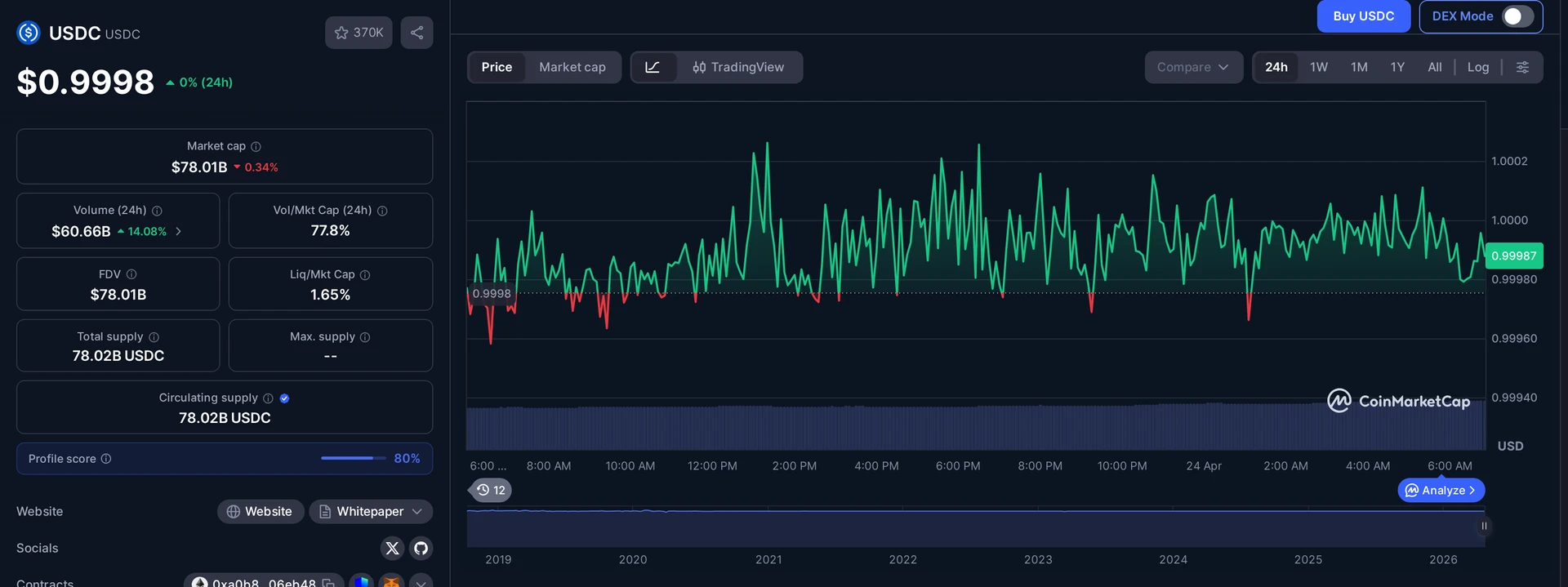
The stakes are real. Stablecoins have ballooned to a $316 billion market cap, with Tether and USDC absorbing the bulk of that total. Most of the collateral behind those tokens already sits in Treasuries and repos. What the fund offers is a single branded, regulated vehicle with Morgan Stanley’s name on it, which is exactly what a newly-public stablecoin issuer or a bank-backed issuer will want when auditors come knocking.
What Does MSNXX Mean for Stablecoin Issuers?
For issuers, the answer-first take is this: MSNXX is a ready-made compliance product that solves the single hardest question a stablecoin operator faces, namely, where does the cash actually live. Plug into the fund, collect the T-bill yield, honor redemptions daily, and hand auditors a Morgan Stanley fund sheet. Done.
That is a meaningful shift. For years, stablecoin reserves sat across a patchwork of banks, including some that later failed (Silvergate, Signature) and some that drew regulatory scrutiny. Tether famously took years to clarify its reserve composition. USDC froze during the Silicon Valley Bank weekend because its cash parking lot was not as boring as the market assumed.
A government money market fund from one of the largest investment banks on earth removes that uncertainty. It also quietly centralizes the industry. If half a dozen issuers all park reserves in MSNXX, Morgan Stanley effectively becomes the back-office of the stablecoin economy. That is a lucrative, low-risk, extremely sticky business.
- Ticker: MSNXX
- Asset mix: U.S. Treasury bills and overnight repurchase agreements only
- NAV target: $1.00 per share
- Liquidity: daily redemptions, no lockup
- Target customer: stablecoin issuers, not retail investors
Morgan Stanley’s Wider Digital Asset Playbook
MSNXX is not a one-off. Morgan Stanley has been stacking digital asset products in rapid succession. Earlier this year the bank launched the Morgan Stanley Bitcoin Trust, a spot bitcoin ETP trading under the MSBT ticker with BNY Mellon handling custody and fund administration. That was the firm’s first direct crypto product wrapped in a regulated vehicle.
It also rolled out tokenized DAP Class shares of its Institutional Liquidity Funds Treasury Securities Portfolio, built in partnership with BNY. In that structure, the ownership records live on a blockchain while BNY keeps the official books. It is the same mental model as MSNXX: take a traditional money market product, wrap it for a crypto-adjacent customer, and route the plumbing through a trusted bank custodian.
Read together, the three launches show a coherent strategy. Bitcoin exposure product for wealth clients. Tokenized Treasury shares for institutional portfolios that want on-chain settlement. And now a reserve fund for issuers. Morgan Stanley is not picking a single crypto thesis. It is selling shovels to every side of the trade.
While still in the early stages, these recent product launches signify our commitment to develop relevant, timely solutions that may address evolving investor needs in an increasingly digital marketplace.
The Competitive Picture: BlackRock, Fidelity, and the Scramble for Reserves
Morgan Stanley is not alone in this chase. BlackRock’s BUIDL fund already parks meaningful stablecoin collateral, and Fidelity has signaled its own tokenized cash strategy. Franklin Templeton has been on the field for over a year with its on-chain money market fund. The pattern is obvious. Every major asset manager sees stablecoin reserves as the rarest thing in capital markets: a large, growing, sticky pool of cash that pays a management fee with almost no risk.
The Morgan Stanley stablecoin fund enters a space where differentiation is thin. All of these vehicles hold Treasuries. All of them offer daily liquidity. Fee pressure is going to be real. What Morgan Stanley has that some competitors do not is a universe of wealth management and prime brokerage relationships already wired into crypto-native firms. That distribution advantage tends to matter more than basis points.
There is also a political layer. If the GENIUS Act becomes law with the expected high-quality liquid asset requirement, regulators will have a short list of acceptable reserve vehicles in mind. The funds that launched early, published disclosures, and built bank-grade custody arrangements will be on that list. Morgan Stanley just put its hand up.
What to Watch Next
The first data point to watch is simple: which issuers actually commit reserves to MSNXX. Circle, Paxos, and the bank-led USDG consortium are the obvious candidates. Tether is less likely, given its long-standing preference for custody outside the U.S. banking system, but even a small allocation would be symbolic.
The second is fee disclosure. Money market funds compete on expense ratios measured in single-digit basis points. If Morgan Stanley prices MSNXX aggressively, it compresses margins across the whole category. If it charges a premium on the brand, it tells the market Morgan Stanley thinks compliance cover is worth paying for.
The third is legislative. If the GENIUS Act stalls, MSNXX becomes a product chasing an unregulated market. If it passes on the current timeline, MSNXX looks prescient. That vote is the pivot point for the whole thesis.
Frequently Asked Questions
What is the Morgan Stanley stablecoin fund?
The Morgan Stanley stablecoin fund, officially the Stablecoin Reserves Portfolio with ticker MSNXX, is a government money market fund from Morgan Stanley Investment Management. It holds only U.S. Treasury bills and overnight repurchase agreements, targets a $1 net asset value, and is designed to hold the cash reserves backing stablecoin tokens.
How does the Stablecoin Reserves Portfolio help issuers?
The Stablecoin Reserves Portfolio gives stablecoin issuers a single regulated vehicle for reserve cash. Issuers deposit dollars, the fund invests them in Treasuries and repos, and issuers can redeem daily with no lockup. That structure satisfies auditors, supports on-demand redemptions, and prepares issuers for expected GENIUS Act compliance rules.
Why does the GENIUS Act matter for this fund?
The GENIUS Act would legally require stablecoin issuers to back tokens with high-quality liquid assets held in regulated vehicles. MSNXX already fits that definition. Morgan Stanley launched the fund before passage so it sits on the compliance shortlist the moment the bill becomes law, capturing reserve flows as they shift into regulated wrappers.
How big is the stablecoin market Morgan Stanley is targeting?
Stablecoins have grown to roughly $316 billion in combined market capitalization, led by Tether and USDC. Most of that collateral already sits in Treasuries and cash-like instruments. Morgan Stanley is targeting the portion of those reserves that will shift into regulated money market funds under new U.S. stablecoin legislation.
This article is for informational purposes only and does not constitute investment advice. Every investment and trading decision involves risk. Readers should conduct their own research before making any financial decisions.