







































What to Know
- 14% chance Kelp DAO socializes the $292 million rsETH loss, according to live Polymarket odds
- Attackers drained roughly 116,500 rsETH from a LayerZero bridge securing reserves across 20+ chains
- Ethereum mainnet holders escaped unharmed, while users on other networks face impaired token backing
- The last major socialized-loss precedent was Bitfinex in 2016, after its $60 million hack
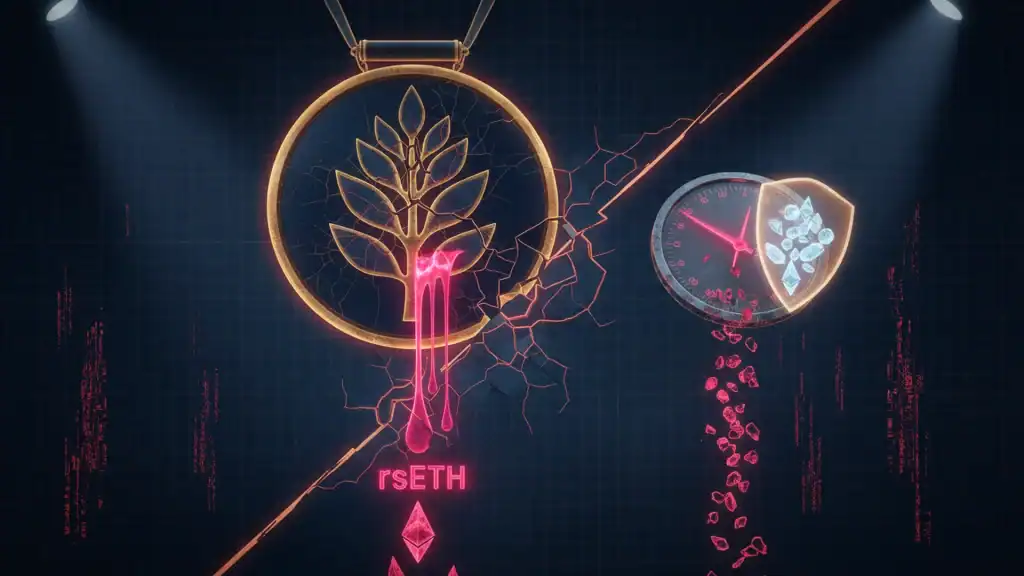
Polymarket traders are calling it early: Kelp DAO probably isn’t about to spread the pain. A contract asking whether the restaking protocol will socialize losses from the weekend’s $292 million exploit is sitting at just 14% odds. Translation? The market thinks rsETH holders on Ethereum, the one chain that dodged the attack, will not be asked to pay for what happened everywhere else.
What the Polymarket Odds Actually Say About Kelp DAO
The answer, at least for now, is skepticism. Bettors on Polymarket have parked the probability of a socialized loss at around 14%, a number that has barely budged since the contract went live. That figure signals traders expect the shortfall to stay concentrated among the users and protocols directly tied to the compromised bridge, rather than being smeared across every rsETH holder in existence.
For anyone holding rsETH on Ethereum mainnet, that is the bet they want to see. Their tokens remained fully backed when the attackers hit, and the crowd is wagering real money that Kelp DAO will not force them into a mutualized bailout. For holders on the affected networks, the same odds read differently. They suggest the losses are going to sit exactly where they fell.
Socializing the losses would mean redistributing the shortfall across every rsETH holder, including those on chains that were never touched. That is a political act as much as a technical one.
How the $292 Million rsETH Exploit Unfolded
The attackers walked off with roughly 116,500 rsETH, drained straight from the reserves meant to back the token across more than 20 blockchains. The vector? A LayerZero powered bridge that held the collateral. Once the reserves were gone, the token’s backing went with them, at least on every chain except the one where the bridge was not the single point of failure.
That is the ugly part. rsETH is supposed to be a liquid representation of restaked ether, fully collateralized and redeemable. After the exploit, parts of the system were left undercollateralized. Some holders, through no fault of their own, are now sitting on tokens that no longer carry a full ETH claim behind them. The Ethereum cohort still does. Everyone else is staring at a haircut they did not sign up for.
- 116,500 rsETH drained from the reserve pool
- $292 million total value taken, at pre-exploit prices
- 20+ blockchains left with partially backed tokens
- Ethereum mainnet reserves untouched, per on-chain data
What Does Socializing Losses Mean in Crypto?
Socializing losses is the practice of forcing every holder of a token or exchange balance to absorb a piece of a loss, even if they were not directly affected. The goal is to keep the system solvent and avoid a disorderly shutdown. The cost is fairness. Users who did nothing wrong get handed a bill for something they never touched.
The most cited precedent is Bitfinex in 2016. After roughly $60 million in bitcoin was stolen, the exchange imposed a flat 36% haircut on every user balance, handing out BFX tokens in exchange. It was controversial, it was unpopular, and it worked. Bitfinex stayed open. More recent versions of the same idea show up in derivatives markets as auto-deleveraging, or ADL, where profitable positions get forcibly closed to cover losses once the insurance fund runs dry.
Why a Kelp DAO Bailout Would Be Harder Than Bitfinex 2016
Bitfinex was a single exchange with a single ledger. It imposed a haircut, issued a recovery token, and moved on. Kelp DAO does not have that luxury. The rsETH reserve was fragmented across more than 20 chains before the exploit, and the damage mirrors that fragmentation. Holders on affected networks are staring at impaired backing. Holders on Ethereum are not. A clean redistribution would require coordinating across every chain, agreeing on a shared liability figure, and persuading users who feel untouched to accept a hit anyway.
That is technically hard and politically worse. DAO governance runs on token votes, and the largest rsETH concentrations sit on the chain that was not hit. Asking those holders to vote themselves into a loss is exactly the kind of turkeys-for-Christmas proposal that rarely clears quorum. The 14% odds on Polymarket look less like a guess and more like a read of governance reality.
- Losses fragmented across 20+ chains, not one ledger
- Ethereum mainnet holders have no direct exposure
- Any redistribution needs a multi-chain governance vote
- Token-weighted voting favors the unaffected Ethereum cohort
What Happens to rsETH Holders on the Affected Chains?
If the Polymarket crowd is right and Kelp DAO does not socialize the losses, the people holding rsETH on the compromised networks are left holding tokens with partial backing. That flows downstream into every DeFi protocol that accepted rsETH as collateral. Lending markets that took rsETH deposits could face bad debt. Liquidity pools paired with rsETH risk severe impermanent loss as the token’s implied price decouples from ether.
There is still a path where Kelp offers something short of full mutualization. A treasury backstop, a staged recovery token modeled on Bitfinex’s BFX, or a negotiated settlement with the largest affected protocols are all on the table. None of those options require forcing Ethereum holders to pay. All of them would leave a smaller, more targeted group sharing the shortfall. Whether the DAO has the treasury or the appetite to pull any of that off is the real question.
What the Broader Market Read Looks Like
Zoom out and the Kelp situation sits inside a larger pattern. Cross-chain bridges keep getting hit. Every major bridge exploit since Ronin has ended with some combination of investor losses, token dilution, and protracted recovery fights. Restaking adds another layer of concentration risk on top, because the same collateral is being used to secure multiple systems at once. When one link fails, the blast radius is wider than a simple exchange hack.
Traders appear to be pricing that in. The 14% odds are not just a judgment on Kelp’s governance, they are a judgment on the entire category. If the market believed DAOs reliably stepped up to spread losses, the odds would be higher. They are not. That tells you something about how much trust remains in the idea of protocol-level insurance.
For now, rsETH’s premium to ether on the affected chains will do the work that governance is not doing. Prices will settle where the market thinks the backing actually sits. Holders who can exit, will. Holders who cannot, will wait to see whether Kelp surprises the crowd.
Frequently Asked Questions
What is Kelp DAO and rsETH?
Kelp DAO is a liquid restaking protocol built on EigenLayer. It issues rsETH, a token representing restaked ether that users can hold, trade, or use as collateral across more than 20 blockchains. Each rsETH is meant to be fully backed by staked ether held in protocol-controlled reserves.
How much was taken in the Kelp DAO exploit?
Attackers drained roughly 116,500 rsETH, valued at approximately $292 million at pre-exploit prices, from a LayerZero powered bridge that held the reserves backing the token across multiple chains. Ethereum mainnet reserves were not affected, leaving that cohort of rsETH holders with fully backed tokens.
What does socializing losses mean?
Socializing losses means spreading a shortfall across every holder of a token, platform balance, or system, even users who were not directly affected. The best known example is Bitfinex in 2016, when the exchange imposed a 36% haircut on all user balances after a $60 million bitcoin hack.
Why do Polymarket traders think Kelp will not socialize losses?
Because the unaffected rsETH holders sit mostly on Ethereum mainnet and would control any governance vote. Forcing them to absorb losses from other chains is politically and technically difficult. The 14% odds reflect market skepticism that the DAO can or will coordinate a cross-chain redistribution.
This article is for informational purposes only and does not constitute investment advice. Every investment and trading decision involves risk. Readers should conduct their own research before making any financial decisions.


















14% feels generous honestly. DAOs almost never socialize losses when the treasury vote is gatekept by the biggest bag holders. Kelp will find some language about ‘affected users’ and push it to insurance partners before anyone sees a haircut.
so is the $292M the pre-exploit TVL or the actual stolen amount? the lead kind of blurs those two and it matters a lot for how the peg recovers
been in this space since the Ronin drain and every single time the community debates socialization, it dies in governance. Nomad, Multichain, Orbit, pick your example. Polymarket is just pricing in pattern recognition at this point.
rsETH depeg to 0.82 was the real tell here
Genuinely curious if anyone knows whether the April 20 exploit touched the validator keys or just the bridge contract. The socialization question reads very differently depending on which layer was compromised, and I haven’t seen a clean post mortem yet.