




































What to Know
- Attorney General Jeanine Pirro announced on Friday that the Justice Department is closing its criminal probe into Fed Chair Jerome Powell over Fed building renovation cost overruns.
- Kalshi’s prediction market on Kevin Warsh’s confirmation before May 15 jumped from roughly 30% to more than 80% within hours of the news.
- Republican Senator Thom Tillis had blocked Warsh’s path while the probe was live, and now says he will vote yes in committee.
- A confirmed Warsh would give Trump a friendlier Fed board on interest rates, stablecoin rules, and broader crypto policy.
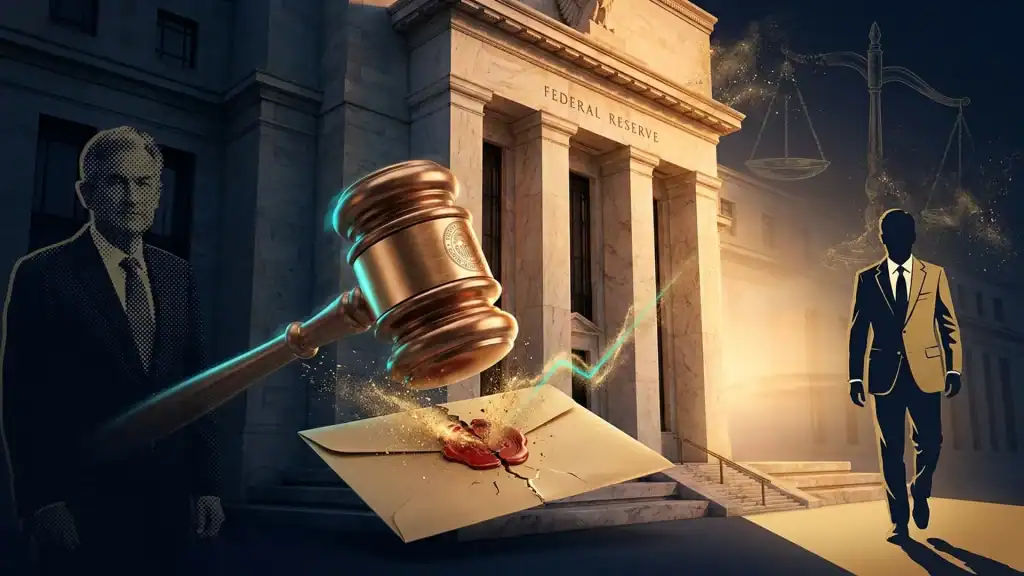
The DOJ drops Powell investigation story that landed on Friday was not really about a Fed building renovation. It was about a Senate vote. With the criminal probe closed, Kevin Warsh’s path to the Federal Reserve chair looks dramatically clearer, and Donald Trump is one step closer to the monetary policy lever he has wanted for two years. Prediction markets reacted within minutes. Crypto traders should be paying attention.
DOJ Drops Powell Investigation: What Triggered the Timing
The short answer: the probe was the last procedural roadblock sitting between Trump and a Republican-held Fed board. U.S. Attorney Jeanine Pirro said on Friday that her office is shutting down the criminal investigation into Jerome Powell over cost overruns at the Fed headquarters renovation, and is handing the matter to the central bank’s inspector general for a written report.
Pirro framed it as a handoff, not a retreat. “I expect a comprehensive report in short order and am confident the outcome will assist in resolving, once and for all, the questions that led this office to issue subpoenas,” she wrote on X. She also left a door open, noting she would not hesitate to restart a criminal case if new facts justified it. You can read her full announcement and the DOJ’s framing in the DOJ drops Powell investigation statement reported Friday.
The timing matters. Powell’s term as chair expires on May 15. Without a successor confirmed before then, the Fed could have been stuck in an awkward limbo, either extending Powell’s authority or running under an acting chair with no political mandate. The renovation probe had turned into a political anchor. Removing it now puts the confirmation clock back on the Senate’s normal schedule.
Note well, however, that I will not hesitate to restart a criminal investigation should the facts warrant doing so.
Kevin Warsh Fed Chair Confirmation Back on Track
Warsh, a former Fed governor with a personal balance sheet that reportedly includes some crypto exposure, already had his Senate Banking Committee Kevin Warsh Fed chair hearing earlier this week. He told the panel he would run the central bank independently of the White House. Few senators on either side believe that pitch completely. Most believe him enough to vote.
The holdout had been Republican Senator Thom Tillis. Tillis said publicly that he would not support Warsh out of committee while the DOJ was still pressing Powell on the renovation. That single no vote, in a committee where Republicans hold the majority by one, was enough to freeze the nomination. With the probe closed, the math flips back to Trump’s side.
Warsh would not arrive at an empty building. The Fed board already has several governors sympathetic to faster rate cuts and lighter-touch regulation. A Warsh chairmanship changes who sets the agenda at the Federal Open Market Committee meetings, who speaks first at press conferences, and who negotiates with Treasury on stablecoin rulemaking. That last point is the one crypto markets are already pricing.
Kalshi Prediction Market Odds Tell the Real Story
Within an hour of the DOJ announcement, the Kalshi prediction market on whether Trump’s Fed chair pick would be confirmed before May 15 moved from around 30% odds to above 80%. That is a 50-point swing on a single headline. You rarely see a reaction that sharp on a government contract without a leak ahead of it.
Prediction markets have become the unofficial exit polls of Washington. Kalshi, Polymarket, and the smaller venues are where analysts, lobbyists, and hedge fund desks put actual money on policy outcomes. When Warsh’s odds triple in an afternoon, it means the room thinks the confirmation is now more than a coin flip. It means the traders who follow Senate whip counts believe the Tillis vote is locked in.
For crypto traders, the signal is simple. A Warsh-led Fed is expected to be more dovish on rates and more accommodating on stablecoin and exchange rules. That combination, lower rates plus softer crypto regulation, is historically the fuel mix that moves Bitcoin higher. The Kalshi line is not just a political bet. It is a leading indicator for digital asset risk appetite into the summer.
- Kalshi odds on Warsh confirmation before May 15: ~30% before the news, >80% after
- The swing priced in roughly a 50-point move within hours
- Traders read the move as Tillis committing to a yes vote in committee
- Softer Fed chair = expected tailwind for Bitcoin and high-beta crypto
Senator Thom Tillis and the Vote Count Math
Senator Thom Tillis posted on X earlier in the week that his support for Warsh was conditional on the DOJ walking away from Powell. His exact language: “I look forward to supporting him out of committee once the DOJ drops their bogus investigation into Chairman Powell that threatens the independence of the Fed.” Tillis now calls Warsh a “great nominee.”
That kind of public ultimatum is rare from a senator in the majority party. It told the White House and Pirro’s office exactly what to fix. On Friday, they fixed it. The committee vote, which had been drifting, now has a realistic path to the floor in the first week of May, giving the Senate roughly ten days of runway before Powell’s chairmanship formally ends.
Democrats are not going quietly. Senator Elizabeth Warren, the ranking Democrat on the banking committee, called the DOJ decision “just an attempt to clear the path for Senate Republicans to install President Trump’s sock pocket Kevin Warsh as Fed chair.” She pointed out that the administration is still pressing a separate case against Fed Governor Lisa Cook in court, which she read as proof the DOJ is using investigations selectively as political use.
This is just an attempt to clear the path for Senate Republicans to install President Trump’s sock pocket Kevin Warsh as Fed chair.
What This Means for Crypto Policy and Stablecoin Rules
Here is the part the mainstream coverage is underselling. The Fed is one of three federal agencies writing the rulebook for stablecoin issuers, bank custody of digital assets, and payment-system access for crypto-native firms. Whoever chairs the Fed decides how aggressively those rules get enforced and how fast the guidance moves. A chair aligned with the White House speeds up the industry’s timeline.
Warsh has been publicly skeptical of heavy-handed regulation and has written about the risks of a central bank that overreaches on non-monetary issues. That record reads as friendlier to crypto than Powell’s, even though Powell himself has moderated in recent years. Industry lobbyists expect Warsh to loosen guidance on bank partnerships with stablecoin issuers within months of confirmation, which could reopen fiat on-ramps that have been quietly throttled since 2023.
There is also the rate-cut story. Trump has been blunt about wanting lower rates, and Warsh has hinted he sees room to ease policy faster than Powell has. Lower rates are not a magic bullet for Bitcoin, but they reduce the opportunity cost of holding a non-yielding asset and tend to pull risk capital back into crypto markets. If Warsh is confirmed and the Fed cuts in June or July, the setup for a Q3 crypto rally looks a lot stronger than it did on Thursday.
The Independence Question Nobody Wants to Answer
Warsh told the banking committee he would act independently of the White House. That is the required answer. Whether the market actually believes it is another matter. A Fed chair installed after the DOJ conveniently closed a case against the outgoing chair is going to wear that timing for years. Every rate decision, every regulatory letter, every speech will be read through the lens of whether Trump got what he wanted.
That perception has a cost. The dollar’s reserve status and the Treasury market’s pricing both rely on global faith that U.S. monetary policy is not run from the Oval Office. If that faith weakens, foreign buyers of Treasuries demand higher yields, which pushes up U.S. borrowing costs and creates the exact problem Trump wants to avoid. It is a circular trap. A chair seen as too loyal could end up delivering higher real rates, not lower ones.
Crypto fits awkwardly into this picture. On one hand, a weakened dollar narrative is historically bullish for Bitcoin as an alternative reserve asset. On the other, a Fed viewed as politically captured raises the odds of capital controls, aggressive enforcement against unhosted wallets, and the kind of macro stress that hits every risk asset. Traders should hold both possibilities in their head at once. The confirmation vote is the first domino, not the last.
What Happens Next Before May 15?
The Senate Banking Committee is expected to move on Warsh within days. If it clears committee on a party-line or near-party-line vote, Majority Leader John Thune can schedule floor debate quickly. A cloture vote would likely land in the first week of May, with final confirmation possible before the May 15 deadline.
Watch three things between now and then. First, whether any other Republican senator goes wobbly, because one defection plus a full Democratic no vote kills the nomination. Second, whether the Fed inspector general’s renovation report comes out before the floor vote, because a damaging finding could give Democrats fresh ammunition. Third, Kalshi and Polymarket odds, which will move faster than cable news on any whip-count shift.
For crypto portfolios, the trade is not to front-run the confirmation. It is to be positioned for what a Warsh Fed actually does in its first 90 days: faster guidance on stablecoin banking access, a likely June or July rate discussion, and a softer tone on crypto enforcement. That package, if it arrives, changes the second-half setup for the entire asset class.
Frequently Asked Questions
Why did the DOJ drop the Powell investigation?
U.S. Attorney Jeanine Pirro announced on Friday that the Justice Department was closing its criminal probe into Fed Chair Jerome Powell over renovation cost overruns and asking the Fed inspector general to produce a report instead. The practical effect was clearing Republican Senator Thom Tillis to support Kevin Warsh’s confirmation.
Who is Kevin Warsh and why does Trump want him as Fed chair?
Kevin Warsh is a former Federal Reserve governor and Trump’s nominee to replace Jerome Powell as Fed chair. Trump picked him because Warsh favors faster rate cuts and lighter regulation, which aligns with the White House’s push for lower borrowing costs and a friendlier stance toward crypto and stablecoin issuers.
How did prediction markets react to the DOJ news?
Kalshi’s contract on whether Trump’s Fed chair pick would be confirmed before May 15 jumped from roughly 30% odds to more than 80% within hours of the DOJ announcement. The 50-point swing signaled that traders now view the Tillis vote as locked in and the confirmation as highly likely.
What does a Warsh-led Fed mean for crypto markets?
A Warsh-led Fed is widely expected to cut interest rates faster and adopt a lighter regulatory touch on stablecoin issuers, bank custody of digital assets, and crypto-native payments firms. That combination historically supports Bitcoin and high-beta crypto prices, though a Fed seen as politically aligned also carries long-term independence risks.
This article is for informational purposes only and does not constitute investment advice. Every investment and trading decision involves risk. Readers should conduct their own research before making any financial decisions.