






































What to Know
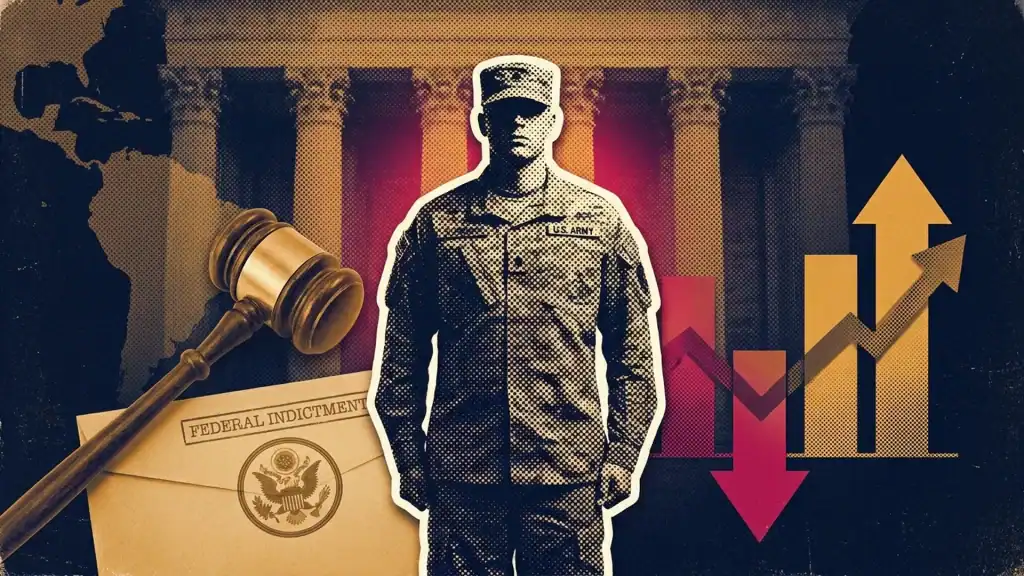
- DOJ charged active-duty Army soldier Gannon Ken Van Dyke, 38, with Polymarket insider trading tied to the January operation that captured Nicolas Maduro.
- Van Dyke allegedly turned roughly $33,000 across 13 bets into more than $400,000 in profits on Venezuela-linked event contracts.
- The CFTC filed a parallel civil complaint seeking disgorgement, restitution, and civil penalties alongside the criminal case.
- Charges include violations of the Commodity Exchange Act, wire fraud, and unlawful monetary transaction, carrying serious prison exposure.
A Polymarket insider trading case has gone from crypto Twitter rumor to a federal indictment, and the defendant is an active-duty United States Army soldier. The Department of Justice charged 38-year-old Gannon Ken Van Dyke on Thursday, accusing him of using classified intelligence from the January military operation that captured Venezuelan strongman Nicolas Maduro to place winning bets on a prediction market. Prosecutors say Van Dyke put roughly $33,000 at stake and walked away with more than $400,000 in profits. The twist is not that someone cheated. It is who cheated, and with what.
How the Polymarket Insider Trading Scheme Worked
According to the unsealed indictment, Van Dyke opened his Polymarket account in December, weeks before the covert operation he allegedly helped plan and carry out. Prosecutors say he placed 13 bets totaling more than $33,000 on markets covering whether Maduro would be out of power by the end of January and when the United States would invade Venezuela. When the January operation went forward and Maduro was captured, those contracts printed. The full DOJ charges Army soldier filing walks through the sequence bet by bet.
The bets were not subtle. One contract paid out if Maduro left office by a specific date. Another resolved on the timing of any U.S. military action inside Venezuela. Van Dyke allegedly sat in planning sessions for the exact operation that would determine both outcomes. That is not a hunch. That is a signal straight from the operations room to the order book.
- Account opened: December 2025, weeks before the January operation
- Total bets: 13 contracts, roughly $33,000 in stakes
- Markets traded: Maduro exit timing and U.S. invasion timing
- Alleged profit: north of $400,000
- Cleanup attempt: Van Dyke reportedly asked Polymarket to delete the account
What Charges Did Van Dyke Get Hit With?
The criminal count stack is heavy. Van Dyke faces violations of the Commodity Exchange Act, wire fraud, and an unlawful monetary transaction charge. The Polymarket insider trading indictment from the Southern District of New York also flags his attempt to erase the account as evidence of consciousness of guilt.
Wire fraud alone can mean up to 20 years per count. The Commodity Exchange Act violations tied to event contracts traded on a designated platform open a second front that crypto defendants rarely face. Tack on the monetary transaction charge, which targets the movement of the winnings, and the sentencing math gets ugly fast.
Any clearance holders thinking of cashing in their access and knowledge for personal gain will be held accountable.
The CFTC Civil Complaint Runs in Parallel
While the criminal case grinds through SDNY, the Commodity Futures Trading Commission filed its own civil action. The CFTC civil complaint seeks disgorgement of the alleged winnings, restitution, and civil money penalties. In plain English, even if the criminal jury wobbles, the agency wants every dollar back plus a punitive top-up.
That two-track approach is classic federal trading-misconduct playbook. The DOJ goes for prison. The CFTC goes for the wallet. Defendants caught on both sides rarely escape clean, and the civil case has a lower burden of proof, which means a criminal acquittal would not necessarily save Van Dyke from financial ruin.
CFTC Chair Michael Selig did not hide his view of the facts. He said Van Dyke was entrusted with confidential information and took action that put national security and service members at risk. That framing matters. It signals the agency wants this treated as a national security case, not a garden-variety trading violation.
Why Maduro Prediction Market Bets Drew Federal Attention
Prediction markets have spent the last year trying to convince Washington they are a public good, a way to price real-world risk faster than pollsters or pundits. The Maduro prediction market bets case puts a dent in that pitch. It is the first high-profile federal prosecution where the alleged insider was not a company executive but a uniformed soldier trading on battlefield intelligence.
The optics are brutal for the industry. Polymarket built its brand on the claim that wisdom-of-crowds pricing reflects what people actually believe. If the pricing on a geopolitical contract reflects what one soldier knew from a classified briefing, the market was not wise. It was front-run.
Lawmakers were already circling. Several members of Congress have floated bans or strict limits on event contracts tied to government policy, military action, or election outcomes. This case hands them a clean talking point. Expect hearings. Expect letters. Expect at least one senator to wave the indictment in the air on camera.
Insider trading has no place on Polymarket. Today’s arrest is proof the system works.
Polymarket’s Response and the Platform Risk Question
Polymarket says it cooperated with the DOJ after flagging a user trading on what looked like classified information. The company framed the arrest as vindication, proof that its surveillance can spot bad actors. That is one read. The other read is that a soldier ran a six-figure scheme for weeks, cashed most of it out, and only got caught because the trades were too obvious to ignore.
Both reads can be true. The platform did flag the activity. The platform also hosted the activity in the first place. Regulators tend to focus on the second half of that sentence.
The bigger question for the industry is whether this case accelerates a formal federal framework for event contracts or triggers a reflexive crackdown. A framework would bring guardrails, surveillance standards, and maybe even restrictions on national security categories. A crackdown would do the same thing with less nuance. The timing, two years into an administration still figuring out its crypto posture, matters.
What Happens Next in the Van Dyke Case?
Van Dyke now moves through the standard federal process. Initial appearance, detention hearing, arraignment, then the slow grind of discovery. Defense counsel will almost certainly challenge the classified-information theory, both on evidentiary grounds and under the Classified Information Procedures Act, which governs how secret material gets used in open court.
The government’s use is the paper trail. Prediction market bets settle on-chain. Every wager Van Dyke placed sits on a public ledger that prosecutors can timestamp against his alleged access to operational planning. That is a harder fact pattern to beat than most white-collar defendants face.
A plea is the most likely outcome. Contested trials involving classified information are painful for everyone, and the evidence here reportedly includes both the on-chain record and his own alleged request to delete the account. If Van Dyke takes a deal, the sentencing guidelines range will come down to how aggressively the judge treats the national security enhancement.
Frequently Asked Questions
What is the Polymarket insider trading case against Gannon Ken Van Dyke?
Van Dyke is an active-duty U.S. Army soldier charged by the DOJ with using classified intelligence from the January military operation that captured Nicolas Maduro to place winning bets on Polymarket. Prosecutors say he turned about $33,000 across 13 bets into more than $400,000 in profits on Venezuela-linked event contracts.
How much did Van Dyke allegedly make on Polymarket?
According to the DOJ, Van Dyke placed 13 bets totaling more than $33,000 and collected over $400,000 in winnings. The contracts tracked whether Maduro would leave power by the end of January and when the United States would move against Venezuela, both outcomes Van Dyke allegedly had classified operational knowledge about.
What charges does the Army soldier face?
Van Dyke is charged with violations of the Commodity Exchange Act, wire fraud, and an unlawful monetary transaction count. The CFTC also filed a civil complaint seeking disgorgement, restitution, and civil penalties. Combined, the charges carry significant prison exposure and the likelihood of full financial clawback if he is convicted or loses the civil case.
Did Polymarket know about the trades?
Polymarket says it flagged the activity and cooperated with the DOJ after identifying a user trading on apparent classified information. The platform called the arrest proof that its compliance system works. Prosecutors also allege Van Dyke tried to have his account deleted, a move the indictment frames as an attempt to hide his identity.
This article is for informational purposes only and does not constitute investment advice. Every investment and trading decision involves risk. Readers should conduct their own research before making any financial decisions.