








































What to Know
- Senator Thom Tillis asked Senate Banking Chair Tim Scott to push the CLARITY Act markup from April to May 2026
- The Digital Chamber fired back the same day, demanding the bill move forward after 270+ days of waiting
- Treasury Secretary Scott Bessent warned the bill could die entirely if Democrats flip the House in November
The CLARITY Act just got another month added to its already exhausting wait. US Republican Senator Thom Tillis of North Carolina told reporters on Monday that he wants Senate Banking Committee Chairman Tim Scott to hold off on the markup until May, arguing that banks and crypto firms still have not sorted out their fight over stablecoin yield. That is the polite version. The blunter read: the single biggest crypto bill of this decade is being held hostage by a disagreement over whether stablecoin issuers can pay rewards on idle balances.
Why Is Tillis Pumping the Brakes on the CLARITY Act Now?
Tillis has spent months refereeing between two industries that do not trust each other. On Monday, Thom Tillis told Punchbowl News he does not expect the Senate Banking Committee to mark up the legislation in April and has recommended Scott reschedule it for next month.
His exact words to Scott, according to the report: “It’s very important to me not to accelerate things, to hear everybody, and give them a rational basis for what we do accept.” Translation: nobody is ready, and ramming a vote through now would blow up the fragile coalition that got the House version across the finish line last summer.
The North Carolina senator has been one of the few lawmakers both sides actually trust, which is why his call for more time carries weight. It also carries risk. Every week this bill sits idle is a week closer to a midterm election that could change the entire calculus.
It’s very important to me not to accelerate things, to hear everybody, and give them a rational basis for what we do accept.
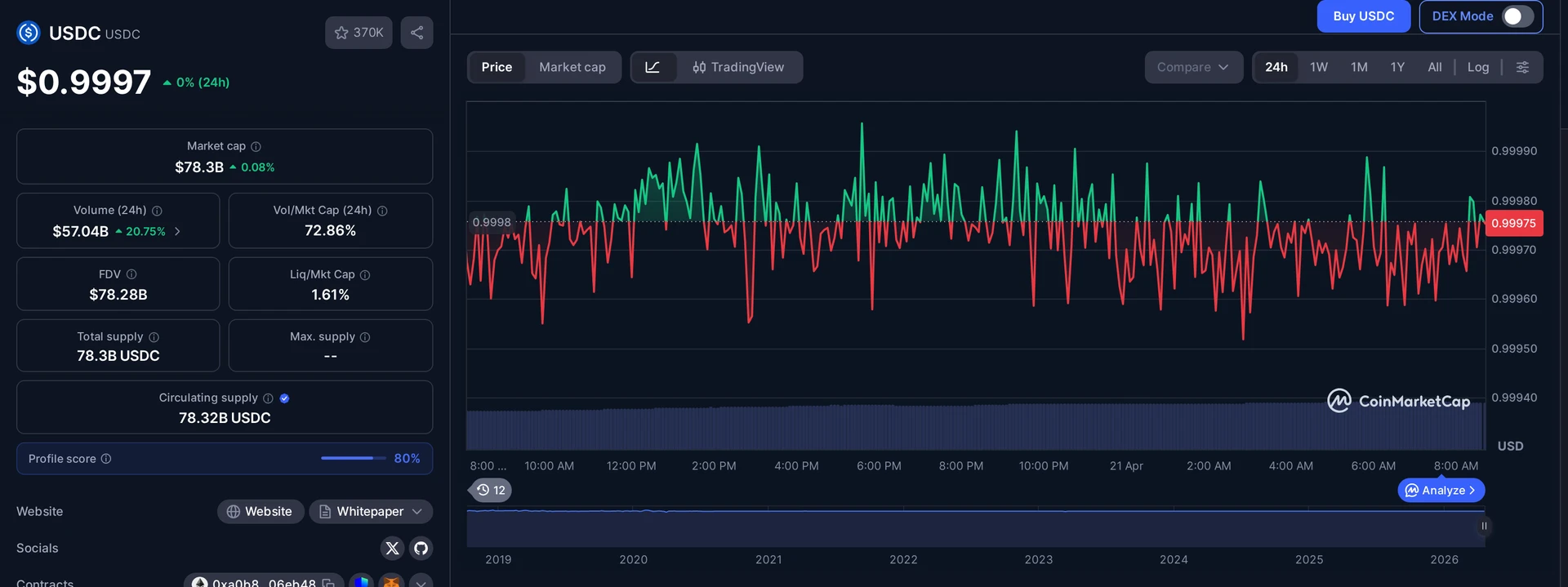
The Stablecoin Yield Fight Nobody Wants to Lose
Here is the actual sticking point. Banks, especially smaller community lenders, are convinced that letting stablecoin issuers pay yield on balances will suck deposits out of checking and savings accounts. Their argument is mechanical: if a dollar in Tether or USDC earns meaningful interest while a dollar at a local bank earns next to nothing, why would anyone leave money in the bank?
The banking lobby has told lawmakers that those deposit outflows could force community banks to chase higher-cost wholesale funding, squeezing margins that are already thin. Tim Scott, who chairs the Senate Banking Committee, has to weigh that concern against a crypto industry that sees stablecoin rewards as a core competitive feature.
Last month, negotiators reportedly got close to a middle ground: stablecoin rewards would be allowed when tied to actual crypto activity on third-party platforms, but not for passive balances sitting idle in a wallet. That framework would let exchanges keep offering yield programs while denying issuers a blanket license to compete with bank deposits. Close, but not closed.
Coinbase CEO Brian Armstrong has been among the loudest voices pushing for friendlier stablecoin language. The banks have responded by tightening their lobbying posture. Tillis is now stuck in the middle, trying to stop either side from walking away from the table.
- Banks fear deposit flight to yield-bearing stablecoins, especially at community lenders
- Crypto firms want the right to reward users for holding dollar-pegged tokens
- The proposed compromise: yield on active crypto activity, not passive balances
- Community banks claim they cannot absorb outflows without expensive wholesale funding
The Digital Chamber Is Done Waiting
On the same day Tillis floated his delay request, the crypto advocacy group The Digital Chamber sent a letter to the Senate Banking Committee demanding the opposite. Move the bill forward, the group wrote, “as soon as the calendar allows.” The contrast could not be sharper. One senator is asking for breathing room. An industry coalition is saying the room has already been aired out plenty.
The Digital Chamber noted that more than 270 days have passed since the House approved the CLARITY Act with bipartisan support in July 2025. That is not a normal legislative delay. That is an entire season of political wind changes, one presidential transition away from the end of this Congress, and roughly 270 days of regulatory uncertainty that has cost firms real money in compliance overhead.
“Clarity cannot wait,” said Taylor Barr, the group’s government affairs director. “More than 70 million Americans who have embraced digital assets deserve the regulatory clarity they have waited far too long for.” Barr’s framing puts the pressure directly on Scott. Every extra week the chairman leaves on the table is a week he owns politically.
More than 70 million Americans who have embraced digital assets deserve the regulatory clarity they have waited far too long for.
What Happens if the Midterms Arrive First?
This is the question that should keep crypto lobbyists awake. Treasury Secretary Scott Bessent said in March that continued delays could reverse the bill’s momentum entirely if Democrats retake the House in November. His quote was blunt: “I think if the Democrats were to take the House, which is far from my best case, then the prospects of getting a deal done will just fall apart.”
Read that carefully. A sitting Treasury Secretary publicly told Congress that a divided government would likely kill the CLARITY Act. That is not a subtle nudge. That is a warning shot aimed at senators who think they have unlimited runway. The political window that opened when Republicans took the trifecta in January 2025 is closing, and every markup delay narrows it further.
The math is not complicated. If Scott schedules markup for May, the bill still needs a committee vote, a full Senate floor vote, reconciliation with the House version, and a presidential signature. In a chamber where a single senator can stall floor time for weeks, that timeline gets tight fast once summer recess and September appropriations season arrive.
Who Wins and Who Loses if May Becomes June?
The cynical read on this delay is straightforward. Banks win. Every month the CLARITY Act sits in limbo is a month stablecoin issuers cannot scale yield products with legal certainty, which protects existing bank deposit bases. Crypto firms lose, at least the ones betting on stablecoin rewards as a growth channel.
There is a less cynical read too. Tillis genuinely seems to believe that a rushed bill is a bad bill. Legislation written under deadline pressure tends to have drafting errors, carve-outs that favor whoever was in the room last, and unresolved ambiguities that regulators exploit for years. A May markup with broader consensus might actually produce a more durable law than an April markup that barely clears committee.
Not everyone inside crypto disagrees with that. Some industry voices have argued that moving the bill forward even with imperfect terms is more important than holding out for ideal language. Better to have flawed clarity than continued chaos. That camp is watching the midterm calendar and doing the same math as Bessent.
The question nobody is answering out loud: what happens if May 2026 comes and banks still have not signed off on the stablecoin yield framework? Does Tillis ask for June? Does Scott override him and force the vote? That is the inflection point this entire saga is heading toward.
What Does This Mean for Crypto Markets Right Now?
Short term, not much. Bitcoin and ether do not care whether a Senate committee marks up a bill this month or next. But for the parts of the market that do care, stablecoin issuers, exchanges building regulated products, and tokenization platforms waiting for a federal framework, the delay is another reminder that US regulatory clarity remains a horizon, not a destination.
Circle, Tether, and the newer dollar-token entrants have built multi-billion-dollar businesses under ambiguous rules. They have adapted. The firms that suffer most from delay are the ones trying to bring new stablecoin products to market now and finding no clean legal path. Those are the businesses that are watching Scott’s calendar with growing frustration.
For traders, the practical signal is that the US will not deliver a market structure framework before summer at the earliest. Anyone pricing in faster timelines is guessing. Anyone positioning for a late-2026 or 2027 rollout is being realistic.
Frequently Asked Questions
What is the CLARITY Act?
The CLARITY Act, formally the Digital Asset Market Clarity Act (H.R. 3633), is the US crypto market structure bill that would divide oversight of digital assets between the SEC and CFTC. It passed the House in July 2025 with bipartisan support and is now awaiting markup in the Senate Banking Committee before a potential floor vote.
Why did Thom Tillis ask to delay the markup?
Tillis told Senate Banking Chair Tim Scott that banking and crypto industry representatives need more time to resolve disagreements over stablecoin yield provisions. He argued that rushing the markup would skip stakeholders who still need to be heard and undermine the rational basis for whatever compromise the committee adopts.
What is the stablecoin yield fight about?
Banks worry that allowing stablecoin issuers to pay yield will pull deposits out of the traditional banking system, especially at community banks that lack balance-sheet flexibility. Crypto firms want rewards programs to remain legal. A tentative compromise would allow yield tied to crypto activity on third-party platforms but not on passive balances.
Could the midterms kill the CLARITY Act?
Treasury Secretary Scott Bessent warned in March that if Democrats retake the House in November 2026, the prospects of passing the CLARITY Act would fall apart. That political reality is why advocacy groups like The Digital Chamber are pressing for an immediate markup rather than accepting further delays into May or later.
This article is for informational purposes only and does not constitute investment advice. Every investment and trading decision involves risk. Readers should conduct their own research before making any financial decisions.
















Delaying to May just kicks the can. The stablecoin yield fight between banks and crypto isn’t going to magically resolve in six weeks, and Tillis knows that.
anyone else curious what specifically Tillis wants reworked in the yield provisions? the article hints at bank lobbying pressure but doesn’t name which sections are actually contested
Seen this movie before with the FIT21 timeline in 2024. Markups get pushed, then pushed again, then a surprise amendment drops the week of the vote. May becomes June, June becomes after recess, you know the drill.