







































What to Know
- Sullivan & Cromwell apologized to a federal judge after a bankruptcy filing contained roughly 40 fake citations produced by AI.
- Legal technologist Damien Charlotin has logged 1,334 AI hallucination incidents in court filings globally, with more than 900 in the US.
- The firm previously served as lead counsel for FTX, which exited bankruptcy under a $14 billion plan in early 2025.
- The bogus citations were caught not by the firm itself, but by rival counsel Boies Schiller Flexner.
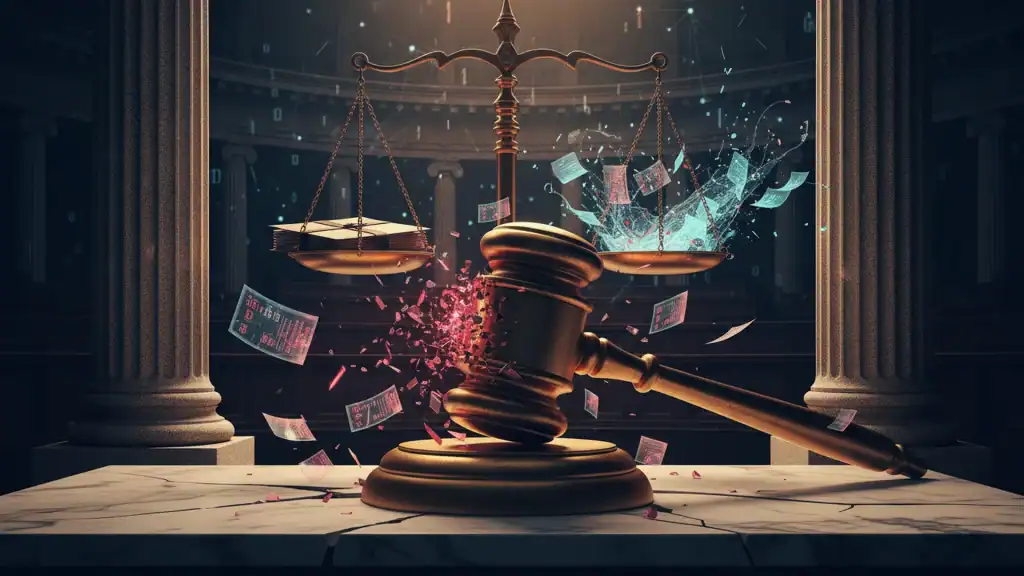
Sullivan & Cromwell, one of the most prestigious law firms on Wall Street, just had the kind of week most partners spend their careers trying to avoid. On Friday, co-head of global restructuring Andrew Dietderich wrote a letter to Chief Judge Martin Glenn of the US Bankruptcy Court for the Southern District of New York apologizing for a court filing stuffed with about 40 incorrect citations generated by AI. The apology, addressed to one of the busiest bankruptcy judges in the country, lands with a thud.
What Sullivan & Cromwell Admitted to Judge Glenn
The letter is short, formal, and brutal in its admission. “We deeply regret that this has occurred,” Dietderich wrote. He took personal responsibility for the failure, citing Local Bankruptcy Rule 9011-1(d), which obligates attorneys to verify the accuracy of every submission they sign off on. The filing in question was an emergency motion, submitted nine days before the apology letter, which means the fabricated citations sat on the docket for more than a week before anyone at the firm flagged them.
According to a report first surfaced by Sullivan & Cromwell in a bankruptcy matter covered by Bloomberg, the firm does have AI policies in place. They include a mandatory human review of any citations produced with AI assistance. Those policies, Dietderich said, simply were not followed on this occasion. He did not name the associate or team responsible, and he did not specify which AI tool generated the bogus case law. What he did confirm is that the mistake was not a gap in policy, it was a gap in practice.
The Firm and I are keenly aware of our responsibility to ensure the accuracy of all submissions, and I take responsibility for the failure to do so.
How Big Is the AI Hallucination Problem in US Courts?
A tracker maintained by legal technologist Damien Charlotin now lists 1,334 documented cases of AI hallucinations in court filings, with more than 900 inside US courts alone. The Sullivan & Cromwell incident is not an outlier, it is the latest data point in an accelerating trend.
Most of the hallucinations Charlotin has catalogued involve fabricated citations, cases that never existed, judges who never ruled, and quotations that were never written. A smaller but growing share involve AI-generated legal arguments that misrepresent real case law. The pattern is consistent across firm sizes, practice areas, and experience levels. A partner at a regional shop and a senior associate at an AmLaw 50 firm can produce the same category of error when the review step gets skipped.
Why This Matters for a Firm That Handled FTX
Sullivan & Cromwell is not just any law firm. It ranks 30th on the AmLaw Global 200 by revenue, and its restructuring practice is one of the most visible in American bankruptcy law. The firm served as lead counsel during the FTX bankruptcy, a case that required sifting through hundreds of thousands of documents, reconstructing a collapsed exchange’s liabilities, and navigating a global creditor base. FTX eventually emerged under a plan valued at more than $14 billion, one of the largest crypto-related recoveries in history.
That track record is exactly why the hallucination story hits harder than it would for a mid-market firm. Creditors, regulators, and future bankruptcy clients expect the attorneys handling billion-dollar estates to catch a fake citation before it reaches a federal docket. When the firm that rebuilt FTX’s legal process cannot vet its own emergency motion, it raises an obvious question for everyone who hires outside counsel: what else is slipping through?
For crypto companies specifically, the overlap is uncomfortable. Many of the same firms handling crypto bankruptcies, SEC responses, and custody disputes have quietly integrated AI drafting tools into their workflows over the past two years. The Sullivan & Cromwell episode is a preview of the accountability problem the industry is about to face at scale.
Who Actually Caught the Mistake
Here is the detail that stings the most. The fake citations were not caught by Sullivan & Cromwell’s internal review. They were not caught by the court’s clerks. They were caught by Boies Schiller Flexner LLP, a rival firm on the other side of the matter. Dietderich confirmed he called Boies Schiller on Friday to thank them for raising the issue and to apologize directly. That is the kind of phone call partners dread for the rest of their careers.
It is also a reminder of how adversarial legal process still works as a safety net. Opposing counsel has every incentive to check citations, and in this case that incentive is what kept a pile of fake case law from being quietly absorbed into a bankruptcy record. Without Boies Schiller, the fabricated authorities could have influenced arguments, orders, or settlement posture before anyone noticed.
- Fake citations were spotted by opposing counsel, not by Sullivan & Cromwell.
- Dietderich called Boies Schiller Flexner personally to apologize.
- The emergency motion had been on the docket for nine days before the letter.
- The firm has launched a full review of the circumstances behind the filing.
What Sullivan & Cromwell Is Doing Next
Dietderich said the firm has already taken “immediate remedial measures,” including a full internal review of how the errors made it past the citation check. He also signaled that Sullivan & Cromwell is “evaluating whether further enhancements to its internal training and review processes are warranted.” Translated out of law-firm speak, that means the AI workflow is getting audited and the training curriculum is about to get rewritten.
The bigger test is cultural, not procedural. Every major firm now has an AI policy on paper. The Sullivan & Cromwell case shows that a policy sitting in a compliance portal does not stop a deadline-pressured associate from pasting AI output into a draft and trusting it. Real change requires workflow controls that make skipping the review step impossible, not just frowned upon. Expect more firms to move toward tools that log every AI-generated passage, require a second attorney to sign off on citations, and flag any authority that cannot be pulled from an official database.
Whether Chief Judge Glenn accepts the apology without further sanction is the other open question. Federal judges have responded to AI hallucination incidents in widely different ways, from accepting apologies to imposing fines and public reprimands. A firm of Sullivan & Cromwell’s stature is unlikely to escape with a quiet nod.
I also called Boies Schiller Flexner LLP on Friday to thank them for bringing this matter to our attention and to apologize directly to them as well.
The Bigger Signal for Law and Crypto
The Sullivan & Cromwell letter is the highest-profile AI hallucination admission in US legal practice to date. It is also a preview. As generative tools get woven deeper into document review, brief drafting, and discovery, the incidents Charlotin tracks will keep multiplying. The next one may not involve a firm that apologizes quickly or a rival counsel sharp enough to catch it.
For crypto, where restructuring work is booming and outside counsel fees are already eye-watering, the incident is a quiet warning. If the firm that guided FTX through its unwind can file 40 fake citations by accident, every client should be asking its lawyers the same question this week: who reviewed this, and did a human actually read it?
Frequently Asked Questions
What did Sullivan & Cromwell apologize for?
Sullivan & Cromwell apologized to Chief Judge Martin Glenn of the US Bankruptcy Court for the Southern District of New York after submitting an emergency motion that contained roughly 40 incorrect citations and other errors produced by AI hallucinations. Co-head of global restructuring Andrew Dietderich accepted personal responsibility for the failure.
How common are AI hallucinations in US court filings?
They are increasingly common. A tracker maintained by legal technologist Damien Charlotin has catalogued 1,334 documented AI hallucination incidents in court filings worldwide, with more than 900 inside the United States. Most cases involve fabricated citations, though some include AI-generated legal arguments that misstate real case law.
Did Sullivan & Cromwell represent FTX?
Yes. Sullivan & Cromwell served as lead counsel for crypto exchange FTX throughout its bankruptcy case, which eventually emerged under a plan valued at more than $14 billion. The firm is ranked 30th on the AmLaw Global 200 and is one of the most prominent restructuring practices in the United States.
Who caught the fake citations in the Sullivan & Cromwell filing?
Opposing counsel Boies Schiller Flexner LLP identified the errors, not Sullivan & Cromwell’s internal review process. Andrew Dietderich personally called Boies Schiller to thank them for flagging the issue and to apologize directly. The filing had been sitting on the bankruptcy court docket for nine days before the apology letter.
This article is for informational purposes only and does not constitute investment advice. Every investment and trading decision involves risk. Readers should conduct their own research before making any financial decisions.















40 fake citations is wild for a firm of that caliber. was it one associate pasting chatgpt output, or did it go through multiple reviewers before landing in front of Glenn?
S&C charges $2k an hour and can’t be bothered to shepardize. the real story here is that big law is quietly outsourcing diligence to LLMs and hoping nobody checks the footnotes.
Glenn has been running the Celsius and Genesis dockets forever, he does not play around with sloppy filings. anyone who practiced in front of him ten years ago knew this was coming the second associates started using these tools without verification.
which model did they use though
genuinely curious if the firm will disclose which tool produced the hallucinations or if that gets buried in the apology. clients deserve to know whether it was an internal RAG setup or just raw GPT output.
bankruptcy filings with fabricated case law in 2026 is embarrassing but predictable. Mata v. Avianca was almost three years ago and firms still haven’t built a verification layer into their workflow.