







































What to Know
- Besqala Mining Valley sits inside Karakalpakstan and runs under a presidential decree signed last Friday
- Registered miners get a full tax exemption through January 1, 2035 in exchange for a monthly 1% fee on mining income
- Approved operators can sell mined coins on foreign platforms, but proceeds must land in Uzbek bank accounts
- The zone accepts renewable, hydrogen and grid power, scrapping the old 2023 rule that forced miners to use solar only
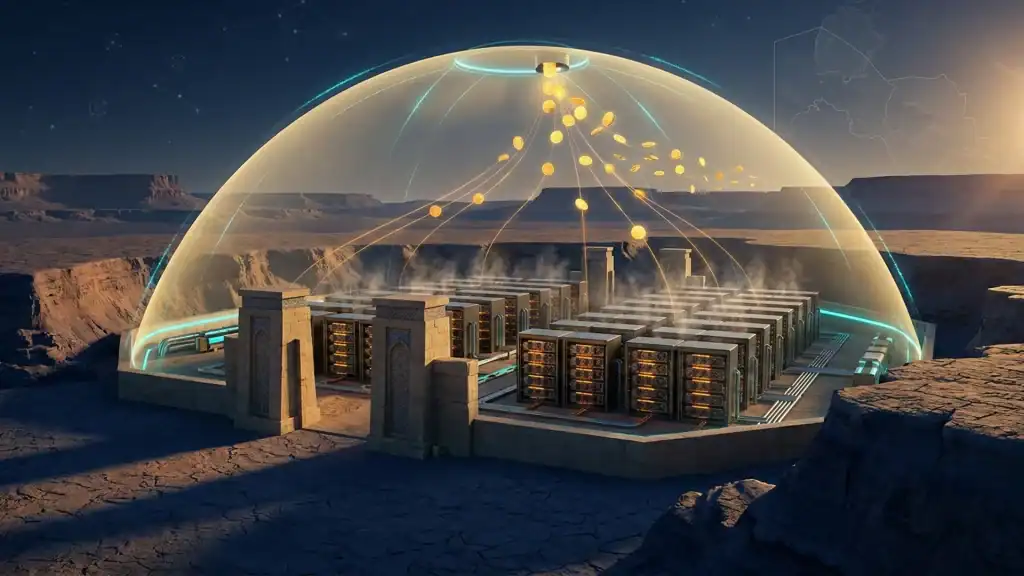
Uzbekistan crypto mining just got a new home, and a very specific set of rules. A presidential decree that took effect Monday carves out a supervised mining zone across the Republic of Karakalpakstan called Besqala Mining Valley. Approved companies can sell their mined coins on international exchanges. They just cannot keep the money abroad.
What Is Besqala Mining Valley?
A Supervised Zone, Not a Free-for-All
Besqala Mining Valley is a special economic zone for digital asset mining, carved into the map of Karakalpakstan by presidential resolution. Legal entities register through a new directorate under the republic’s Council of Ministers. Once inside, they get resident status, a defined tariff structure, and clear sales rights. Outside the fence, the old rules still apply.
The decree is specific about what residents can do. They can mine. They can mix power sources. They can sell what they mine on national exchanges or foreign venues through direct contracts. They can swap mined coins for other liquid crypto assets. None of this was straightforward under the previous regime.
Registered legal entities can carry out crypto mining, use a mix of power sources and apply for resident status through a new directorate under the republic’s Council of Ministers.
The Tax Deal: 1% Monthly, Nothing Else Until 2035
Here is where it gets interesting. Miners inside the zone pay a flat 1% monthly fee on mining income to the directorate that runs the zone. That is the price of admission. Everything else, corporate tax, VAT, the usual payload, is waived through January 1, 2035. Almost nine years of near-silent overhead.
The decree also tells officials to draft amendments to Uzbekistan’s tax code within two months, which suggests the 1% figure is not a stopgap. Tashkent wants the structure locked into law, not left dangling as an executive favor that a future administration could strip out.
For miners staring at energy bills in Kazakhstan or watching U.S. states raise industrial power rates, the math is blunt. A known fee, a long runway, and a government that has already put a supervisory body in place. That is a more predictable environment than most jurisdictions are offering right now.
- 1% monthly fee on mining income, paid to the zone’s directorate
- Full tax exemption through January 1, 2035
- Tax code amendments due within two months
- Power options include renewable, hydrogen and grid electricity
Why Karakalpakstan, and Why Now?
Karakalpakstan is the poorest region in Uzbekistan, and the government is not pretending otherwise. A 2025 United Nations Development Programme report flagged the autonomous republic for high poverty rates and thin industrial development. Mining valleys, AI zones, data center parks: these are the tools Tashkent has picked to change that picture.
The Besqala decree does not arrive in isolation. Reuters reported in November 2025 that Uzbekistan had already set up a separate tax-free zone in Karakalpakstan for artificial intelligence and data center projects, with discounted electricity and duty exemptions for foreign investors who commit $100 million or more. Under that initiative, heavyweight backers get full tax relief until 2040. The government is projecting over $1 billion in foreign investment into the AI zone by 2030.
Stacking a crypto mining zone on top of an AI and data center zone, in the same republic, is not a coincidence. Both industries want cheap power, cool climates, and light-touch regulation. Karakalpakstan can offer all three, and the state gets a shot at reducing poverty numbers that have embarrassed planners for years.
How the Money Actually Moves
The supervision in Uzbekistan crypto mining is not hidden. Miners can sell on any platform they want, including venues outside Uzbekistan, using direct contracts or exchange flows. But when the fiat lands, it has to land inside an Uzbek bank. Offshore custody of proceeds is off the table.
That requirement changes the incentive profile. The zone is tax-light, not capital-free. The government is underwriting the build-out with nearly a decade of tax relief, and in return it wants the cash back inside its banking system, where it can circulate, be taxed on spending, and support the som. This is a sovereign deal, not an offshore play.
The framing also reveals something about how Tashkent sees crypto. Mining is an industrial process that generates foreign currency. Foreign currency is a macroeconomic asset. So the rules treat mined Bitcoin the same way a regulator would treat cotton export proceeds: sell where you like, bring the money home.
Proceeds from those sales must be transferred to bank accounts in Uzbekistan.
What Changed From the 2023 Solar-Only Rule?
In 2023, Uzbekistan’s National Agency for Perspective Projects issued a decree that licensed crypto mining but forced operators to use solar power only. That rule was designed to protect the national grid during peak winter demand, when Uzbek households were already facing rolling outages. It also ruled out most serious industrial miners, who cannot build profitable operations on seasonal solar alone.
The new Besqala framework tears that constraint down inside the zone. Operators can combine renewable generation, hydrogen, and grid electricity. Grid draw carries higher tariffs, which is the government’s way of steering miners toward on-site generation without banning grid use outright. It is a nuanced compromise, and it is more workable than the solar-only rule ever was.
The shift also shows how fast the regulatory tone has moved. Two years ago, mining was treated as a grid risk to be contained. Today, it is treated as an investment lever to be pulled. The same ministries that wrote the restrictive 2023 rule are now writing incentives. Policy has a short memory when the revenue model is right.
- 2023 rule: solar power only, narrow licensing
- 2026 rule: mixed power sources allowed inside the zone
- Grid electricity permitted, but at higher tariffs
- Hydrogen added to the approved generation mix
What Does Uzbekistan Crypto Mining Mean for Global Operators?
For operators already hunting for jurisdictions after the U.S. election-year tariff noise and rising Kazakh fees, Uzbekistan just printed a term sheet. Nine years of tax relief, a clear 1% ongoing charge, legal sales to foreign buyers, and a geographic footprint next to an AI zone that will be pulling fiber and power infrastructure into the same region.
The catch is the capital controls. Anyone running mining as an offshore treasury play will not like routing proceeds through Uzbek banks. But for firms that want a real operating base, and are comfortable banking locally, the Besqala framework is one of the more coherent mining regimes any state has published this year.
The next thing to watch is the draft tax code. The decree sets the direction, but the statutory language will decide whether this becomes a serious industry or another paper zone. Tashkent has 60 days to show its work.
Frequently Asked Questions
What is Besqala Mining Valley?
Besqala Mining Valley is a state-supervised crypto mining zone in the Republic of Karakalpakstan, created by a presidential decree that took effect on April 20, 2026. Registered residents can mine digital assets, sell on foreign platforms, and operate under a tax exemption through January 1, 2035, in exchange for a 1% monthly fee.
How does Uzbekistan crypto mining taxation work inside the zone?
Miners registered in Besqala Mining Valley pay a flat 1% monthly fee on mining income to the zone’s directorate. All other taxes, including corporate income tax and VAT, are waived until January 1, 2035. The government has also ordered officials to draft formal amendments to the national tax code within two months.
Why did Uzbekistan pick Karakalpakstan for the mining zone?
Karakalpakstan has high poverty rates and limited industry, according to a 2025 UN Development Programme report. Uzbekistan is using special-zone incentives to attract foreign capital into the region. A parallel AI and data center zone targeting over $1 billion in foreign investment by 2030 already exists in the same republic.
Can miners sell their crypto abroad under the new rules?
Yes. Approved miners can sell mined digital assets on national exchanges or foreign platforms through direct contracts, and can swap them for other liquid crypto assets. The one strict condition is that all fiat proceeds from those sales must be transferred into bank accounts located inside Uzbekistan.
This article is for informational purposes only and does not constitute investment advice. Every investment and trading decision involves risk. Readers should conduct their own research before making any financial decisions.















Tax break through 2035 is aggressive but Karakalpakstan power grid is the real question, anyone seen actual MW capacity numbers for Besqala?
kazakhstan tried this exact playbook in 2021 and ended up rationing power to miners within 18 months. uzbekistan better have the generation locked in before the rigs show up
nine year exemption is wild, that outlasts most mining hardware cycles twice over