






































What to Know
- The Trump administration froze $344 million in USDT the US says moved through wallets connected to Iran.
- Tether confirmed the block on two addresses was done with OFAC and US law enforcement on April 23.
- Treasury Secretary Scott Bessent said Friday the agency is sanctioning more wallets tied to Tehran’s financial lifelines.
- Blockchain analytics firms estimate Iran-linked crypto flows topped billions of dollars in 2025.
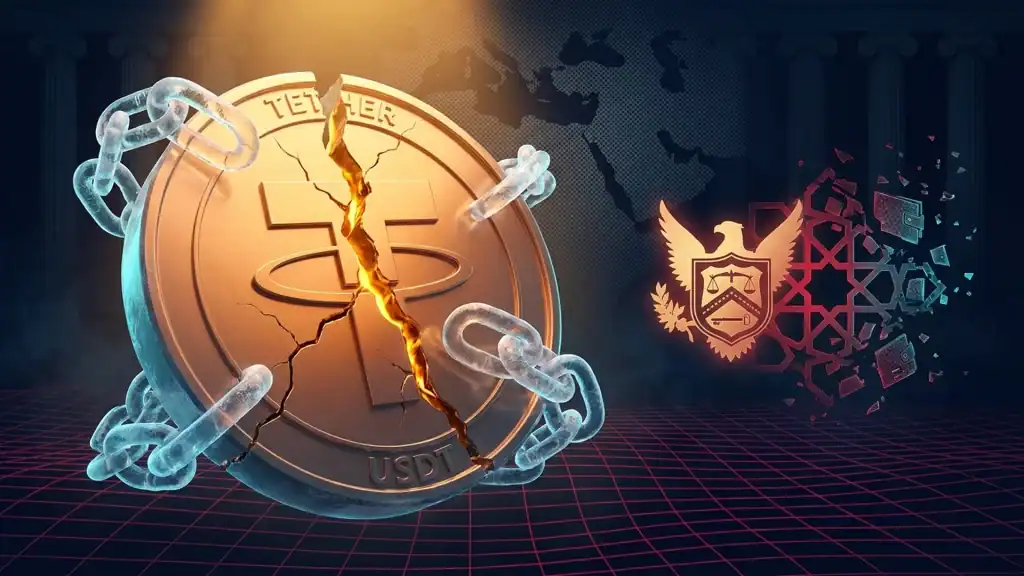
The Tether $344 million freeze has a new label: Iran. One day after the stablecoin issuer said it had blocked two USDT addresses at the request of US authorities, a US official told reporters on Friday that the frozen funds moved through wallets tied to Iranian exchanges and intermediaries that allegedly interacted with Central Bank of Iran associated addresses. That framing turns what looked like a routine compliance action into a sanctions story, and it lands while the White House is still trying to keep diplomatic pressure on Tehran from tipping into something worse.
Inside the Tether $344 Million Freeze
The topline number is simple. $344 million in USDT, held across two wallets, is now unspendable. According to Tether $344 million freeze disclosures issued on April 23, the company acted after several US authorities shared information about activity it said was tied to unlawful conduct. The block was coordinated with the Office of Foreign Assets Control and other agencies.
What Tether itself did not say, at least not explicitly, is that the money belonged to Iran. That detail came the next day from a US official speaking to reporters. The official described transactions with Iranian exchanges and intermediary wallets that, the government says, had interacted with addresses connected to the Central Bank of Iran. Reporters noted they had not independently corroborated the Iran link.
So you have two overlapping stories running on the same $344 million. One is a compliance freeze by a private issuer. The other is a sanctions play by Washington. They are the same event described by two very different speakers, and the gap between those descriptions matters.
Why the Iran Link Changes the Story
On its face a frozen wallet is a frozen wallet. But once the Treasury Department ties that wallet to a sanctioned state, the action stops being about one address and starts being about a policy direction. The US crypto freeze linked to Iran framing gives Washington something politically useful: a concrete, dollar-denominated win it can point to while diplomatic channels with Tehran stay fragile.
It also forces the rest of the stablecoin market to pay attention. If the government is willing to name Iran publicly on a single freeze of this size, issuers other than Tether now have a clearer picture of what kinds of flows will attract the same treatment. For a sector that spent years arguing that stablecoins were neutral plumbing, that is a significant reframing.
The timing is pointed. The freeze comes as Congress debates broader rules for stablecoin issuers, and as Treasury continues to expand the list of wallet addresses it considers blocked property. Naming Iran on a $344 million action is not a whisper. It is the loudest possible way to tell the industry what the administration expects.
The US would target financial lifelines connected to the regime.
Bessent’s Broader Sanctions Push
Speaking on Friday, Treasury Secretary Scott Bessent said the agency was sanctioning multiple wallets tied to Iran, framing the freeze as one piece of a wider campaign. The Scott Bessent Iran sanctions announcement described the effort as targeting the financial lifelines the regime uses to move money across borders.
Read closely, Bessent’s language is doing two things at once. It tells Tehran that dollar-denominated stablecoins will not offer a quiet exit from the US sanctions regime. And it tells American voters that the administration is acting, visibly, on a front where enforcement has historically been uneven. Both audiences matter.
Industry lawyers have spent years waiting for Treasury to clarify where stablecoin enforcement actually ends. This week’s actions move that line. When a Treasury Secretary stands up and publicly connects a specific stablecoin freeze to a specific sanctions target, the policy position stops being theoretical.
The Treasury has not named every wallet it is reviewing. But officials made clear the $344 million action is not a one-off. Expect more announcements in the coming weeks, and expect them to keep pointing at stablecoins.
How Does Tether Freeze USDT in the First Place?
Tether can freeze tokens because it controls the contract that issues them. The company has long said it will blacklist addresses when it receives credible requests from law enforcement, and it has done so at scale. A Reuters report in February said Tether had frozen $4.2 billion in USDT tied to crime-related activity.
The mechanism is not subtle. A blacklisted address can still hold USDT on paper, but any attempt to move the tokens fails at the contract level. For a government trying to disrupt illicit flows, that is a more powerful tool than a traditional bank freeze, because it works across every chain where Tether has deployed USDT and it works in minutes rather than weeks.
That power is also what makes the $344 million action politically interesting. Tether, a company domiciled outside the United States, is acting as a direct extension of US sanctions policy when it blocks addresses at Washington’s request. Critics will argue that is exactly the centralization risk stablecoin skeptics have warned about. Supporters will argue it is exactly why regulated stablecoins beat unregulated alternatives.
- Tether operates the smart contract that mints and redeems USDT, which gives it the technical ability to block any address.
- Freezes are executed on-chain, meaning the blocked tokens cannot be moved on any network where USDT is deployed.
- The company says it has supported more than 2,300 cases globally across 340 agencies in 65 countries.
- Previous freezes include a Reuters-reported $4.2 billion tied to crime-related activity as of February.
Iran’s Crypto Footprint Keeps Growing
Iran’s use of crypto is not a new concern. For years, US officials and blockchain analytics firms have tracked flows through exchanges, mixers, and over-the-counter desks that they say connect to sanctioned Iranian entities. What has changed is the scale.
Firms including TRM Labs and Chainalysis have estimated that Iran-related crypto flows reached billions of dollars in 2025. Those numbers come with caveats. On-chain attribution is imperfect, and some flagged flows may reflect domestic activity rather than sanctions evasion. Still, the trend line is clear. Crypto is a meaningful channel, and Tehran knows it.
For investigators, the Tether freeze is the kind of case they have been building toward. It gives them a specific dollar amount, specific addresses, and a specific on-ramp to demonstrate. That matters in courtrooms and in Congress, where abstract claims about sanctions evasion have historically lost out to concrete examples.
Whether $344 million is a meaningful dent in Iran’s crypto activity or a symbolic one depends on numbers no one outside the intelligence community has. The estimates suggest billions move through related channels each year. The freeze captures a slice of that, not all of it.
What This Means for Stablecoin Issuers
Pressure on stablecoin issuers is not going down. Regulators have warned that stablecoins remain a key channel for sanctions evasion and money laundering, and the Treasury’s willingness to publicly connect a $344 million freeze to Iran reinforces that message.
Other issuers will read the room. Circle, Paxos, and a growing list of newer stablecoin operators all have compliance programs, but none has been tested at the scale Tether now faces. The next freeze of this size will probably not be a USDT freeze. Whoever is next will be studying this week’s playbook closely.
For traders, the practical takeaway is narrower. A wallet connected to sanctioned activity is a dead wallet, and the counterparties that touched it are getting a very unpleasant call. For everyone else, the USDT in your exchange account works the same on Monday as it did on Thursday.
The bigger question is what stablecoin policy looks like six months from now. If Treasury keeps naming targets and keeps pointing at USDT freezes as proof of concept, Congress will have cover to write rules that bake this level of issuer cooperation into law. That is a very different stablecoin market than the one the industry spent the last five years describing.
Frequently Asked Questions
What is the Tether $344 million freeze?
The Tether $344 million freeze is a block placed on two USDT wallet addresses on April 23, carried out by Tether in coordination with OFAC and US law enforcement. US officials say the frozen funds moved through wallets linked to Iranian exchanges and Central Bank of Iran associated addresses.
How did the US connect the frozen crypto to Iran?
A US official told reporters the government had information tying the wallets to transactions with Iranian exchanges and intermediary addresses that interacted with Central Bank of Iran associated wallets. Reporters said they had not independently corroborated the Iran link, but Treasury Secretary Scott Bessent announced related sanctions the same day.
Can Tether freeze any USDT wallet?
Yes. Tether controls the smart contract that issues USDT, which means it can blacklist any address holding its tokens. Once blacklisted, the tokens cannot be moved. The company says it has supported more than 2,300 cases across 340 agencies in 65 countries and has previously frozen over $4.2 billion.
Why does this freeze matter for stablecoin regulation?
The freeze shows Treasury is willing to publicly connect stablecoin actions to specific sanctions targets like Iran. That reframes stablecoins as active enforcement tools rather than neutral payment rails, and it gives Congress a concrete example to cite as it writes broader rules for stablecoin issuers in the coming months.
This article is for informational purposes only and does not constitute investment advice. Every investment and trading decision involves risk. Readers should conduct their own research before making any financial decisions.