







































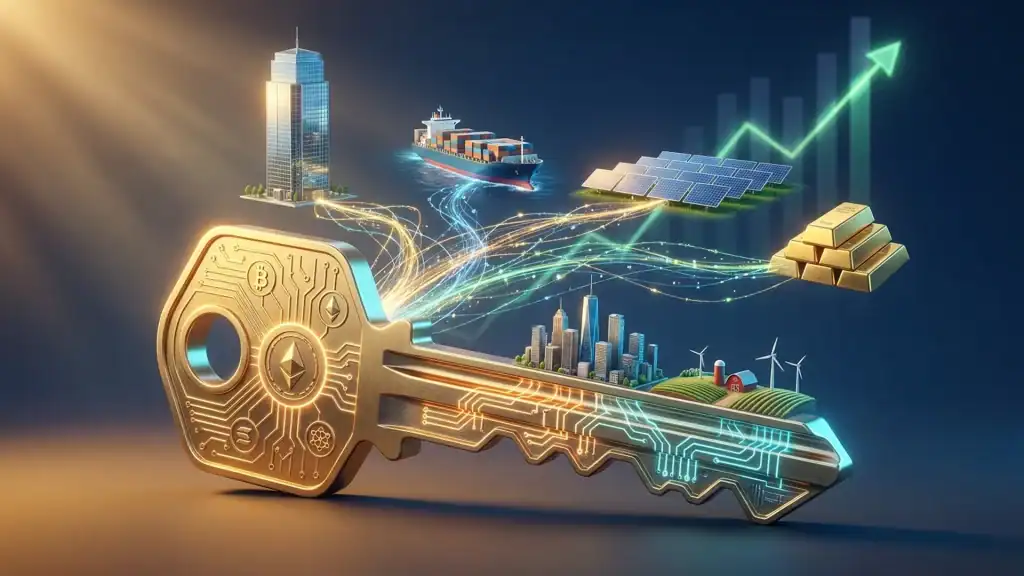
The next cryptocurrency bull run will be fundamentally different from previous cycles. While past cycles were driven by speculation, ICOs, DeFi summer, and NFT mania, the 2025-2027 cycle appears poised to be powered by something far more substantial: the tokenization of real-world assets (RWAs). With over $500 trillion in global financial assets as the addressable market, RWAs represent crypto’s move from speculative asset class to financial infrastructure.
Key Takeaways
- Real-World Asset (RWA) tokenization is emerging as the dominant narrative for the next bull run.
- BlackRock, Franklin Templeton, and major banks are actively tokenizing treasuries and bonds.
- The RWA total addressable market exceeds $500 trillion globally across bonds, real estate, and equities.
- Protocols like Ondo, MakerDAO, and Centrifuge lead on-chain RWA infrastructure.
- Regulatory clarity and institutional demand are the key catalysts for RWA growth.
Why RWAs Are the Logical Next Narrative
Every crypto cycle has been defined by a dominant theme. 2017 was ICOs, 2020 was DeFi, 2021 was NFTs and memecoins. These narratives attracted capital, but each faded as unsustainable speculation gave way to reality. RWAs are different, they bring real cash flows, institutional-grade assets, and regulatory clarity to blockchain.
Consider the scale mismatch:
- Total crypto market cap: ~$2-4 trillion
- Global bond market: ~$130 trillion
- Global real estate: ~$380 trillion
- Global equities: ~$100 trillion
- Private credit: ~$1.5 trillion (fastest growing)
Even capturing 1% of traditional financial markets would represent multiples of current crypto market capitalization.
What Counts as a Real-World Asset?
RWAs are tokenized versions of traditional financial or physical assets represented on blockchain. Categories include:
| RWA Category | Examples | Use Case |
|---|---|---|
| U.S. Treasuries | BlackRock BUIDL, Ondo USDY | Stable yield, cash equivalent |
| Corporate Debt | Private credit funds | Higher yield, institutional access |
| Real Estate | Fractional property NFTs | Property investment at lower cost |
| Commodities | Gold-backed tokens (PAXG) | Inflation hedge, 24/7 trading |
| Equities | Tokenized stocks | Global access to US markets |
| Invoices | Trade finance tokens | Short-term yield |
Institutional Money Is Already Here
BlackRock’s BUIDL Fund
BlackRock’s BUIDL fund tokenizes U.S. Treasury bills and cash, offering institutional investors a blockchain-native money market product. Within months of launch, BUIDL crossed hundreds of millions in AUM, becoming the largest tokenized treasury product.
Franklin Templeton’s FOBXX
Franklin Templeton pioneered tokenized government money market funds, with products running on Stellar and other chains. Their long-standing commitment to blockchain signals the industry’s direction.
Major Banks Join In
JPMorgan, HSBC, Citi, Goldman Sachs, and other major banks have launched blockchain-based tokenization platforms. While often on private blockchains, these initiatives establish the infrastructure for eventual public-chain integration.
💡 Tip:Watch institutional announcements closely. Each major bank or asset manager launching tokenization products is a signal that RWA adoption is accelerating structurally.
Leading RWA Protocols
Ondo Finance
Ondo tokenizes U.S. treasuries through its OUSG and USDY products. OUSG provides institutional access to Treasury yields on-chain, while USDY extends similar benefits to retail users globally.
MakerDAO (Sky)
MakerDAO pivoted from crypto-native collateral to include substantial RWA backing for DAI/USDS. Their RWA portfolio generates real yield that supports DAI Savings Rate payments.
Centrifuge
Centrifuge specializes in bringing private credit on-chain, invoices, inventory financing, and other short-duration corporate debt. Their platform connects asset originators with DeFi liquidity.
Polymesh
Polymesh is a purpose-built blockchain for regulated securities. Its permissioned validator model and compliance features make it attractive for institutional RWA issuance.
The Regulatory Tailwind
Unlike many crypto narratives facing regulatory headwinds, RWAs benefit from:
- Clear legal frameworks for underlying assets
- Established securities regulations
- Institutional-friendly structures
- Compliance-first design approach
- Growing regulatory clarity on tokenization
This regulatory alignment means RWA growth doesn’t depend on favorable new legislation, existing securities law already accommodates tokenized assets when properly structured.
⚠️ Warning:Not all RWA protocols are equal. Some lack proper legal structures, real asset backing, or recovery mechanisms. Always research the legal framework, custody arrangements, and audit status of RWA products.
Why This Cycle Is Different
Previous crypto narratives produced spectacular returns but faded quickly because they lacked:
- Sustainable demand:Speculation creates boom-bust cycles
- Real cash flows:Most tokens had no underlying revenue
- Institutional adoption:Retail-only markets are volatile
- Regulatory alignment:Many projects operated in gray zones
RWAs reverse every one of these dynamics. The demand is institutional and persistent, the assets produce real cash flows, the market is deep and liquid, and the regulatory framework is established.
How to Position for the RWA Thesis
Direct RWA Token Exposure
Tokens tied to leading RWA protocols may benefit from increased usage, though valuation depends on specific tokenomics.
Yield Products
Protocols offering tokenized yield (USDY, sDAI, etc.) provide passive income backed by real assets.
Ecosystem Plays
Blockchains most likely to host RWA activity, Ethereum, various L2s, Polygon, Stellar, benefit from increased network usage.
Infrastructure
Oracle networks (Chainlink), custody providers, and compliance infrastructure all benefit from RWA growth.
📌 Note:This article represents the author’s opinion and analysis, not financial advice. Tokenization is evolving rapidly and specific investments carry significant risks. Consult a qualified advisor before investing.
Risks to the RWA Thesis
No thesis is without risk. Key concerns include:
- Regulatory reversal:Unfavorable securities interpretation could slow adoption
- Smart contract risk:Protocol exploits could damage confidence
- Counterparty risk:Asset custodians could fail
- Competition from private chains:Banks may prefer private infrastructure
- Adoption timing:Enterprise adoption takes longer than retail
The Bottom Line
RWAs represent crypto’s maturation from a speculative casino into legitimate financial infrastructure. The next bull run, when it arrives, will likely be driven less by memes and more by institutional capital flowing into tokenized real-world value. Investors who position accordingly, across leading RWA protocols, supporting infrastructure, and ecosystem beneficiaries, may find the 2025-2027 cycle produces the most durable gains crypto has ever seen.
The winners will be those who recognize that “boring”, stable yields, regulated products, institutional flows, is exactly what the next crypto bull run needs to reach the trillions in addressable market that have always been the real prize.











Ondo and Maker are doing the heavy lifting right now but the real question is regulatory clarity on tokenized treasuries. If the SEC keeps treating them as securities, secondary market liquidity stays fragmented and that $500T TAM number is just a headline.
the 500 trillion number is doing a lot of work in this piece
Been in since 2016 and I remember when everyone said enterprise blockchain was the next narrative. Hyperledger, R3, IBM pilots, all of it went nowhere for retail. BlackRock tokenizing BUIDL is different because the yield is real, but don’t confuse institutional adoption with a retail bull run. Those are two different things.
genuine question for anyone actually using Ondo: how’s the redemption process during off-hours? curious if the T-bill wrapper actually delivers 24/7 liquidity or if you’re stuck waiting for traditional market open.