






































What to Know
- 1.7 million BTC sit in Satoshi-era addresses with exposed public keys, worth roughly $145 billion at current prices
- Long-term holders already distribute 10,000 to 30,000 BTC every day during bull runs, so the quantum stash equals two to three months of normal selling
- The 2026 bear market absorbed 2.3 million BTC in a single quarter, more than the entire vulnerable Satoshi cohort, with no collapse
- The real fight is governance: whether to freeze the old coins through BIP-361 or let the market eat them
The bitcoin quantum threat keeps getting framed as the asset’s looming death sentence. James Check, the on-chain analyst behind Checkonchain, just ran the numbers and arrived somewhere different. His read: a working quantum computer cracking Satoshi-era keys would dump roughly $145 billion of supply onto a market that already chews through that volume on a quiet quarter. Scary headline, ordinary math.
How Big Is the Bitcoin Quantum Threat in Dollar Terms?
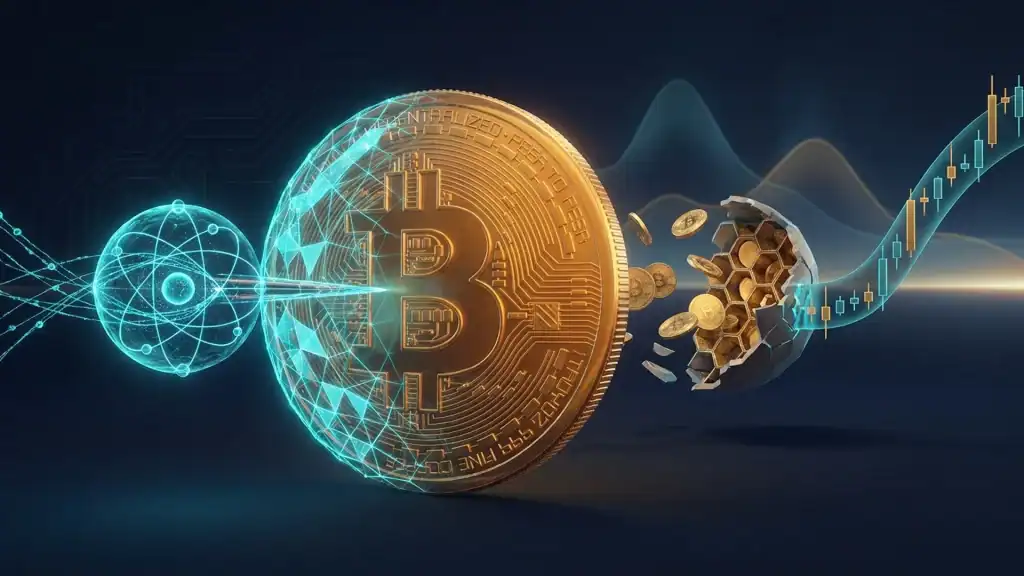
The exposed pile is roughly 1.7 million BTC, worth about $145 billion at today’s price. These are mostly Satoshi-era P2PK outputs and reused-key addresses where the public key is already visible on chain. A cryptographically relevant quantum computer could derive the private key from that public key and sweep the coins.
That is the doomsday scenario the maximalist camp has been waving around for a decade. Coins move, market panics, price implodes. Check’s counter is simple. Bitcoin’s market already absorbs that kind of supply, on a routine basis, without anyone losing sleep.
In Check’s latest research, published this week, the analyst lays out the comparison in plain numbers. Long-term holders, defined as wallets that have sat on coins for at least 155 days, routinely distribute between 10,000 and 30,000 BTC per day during bull phases. Run that pace against the full quantum-vulnerable cohort and you get two to three months of normal profit taking. Not an apocalypse. A quarter.
What appears massive in isolation becomes relatively ordinary when set against bitcoin’s existing liquidity and turnover.

Why the Liquidity Math Defangs the Doomsday Scenario
Look at the recent bear market. More than 2.3 million BTC changed hands in a single quarter. That is bigger than the entire Satoshi-era vulnerable supply, and the market did not collapse. It bled, it bounced, it kept trading.
Monthly exchange inflows run close to 850,000 BTC. Derivatives markets cycle through notional volume equivalent to the full Satoshi stash every few days. Spot order books, perp funding, options flow, all of it dwarfs the quantum number when you actually pull the data. The $145 billion figure only sounds like a meteor strike if you ignore what bitcoin’s plumbing looks like in 2026.
There is a behavioral angle too. Whoever cracked those keys would not nuke the market on purpose. They would be sitting on the largest single windfall in financial history, and dumping it all at once would torch their own exit. The rational play is gradual distribution, hedged through derivatives to minimize slippage. That is exactly what every large holder already does. The quantum thief, in other words, would behave like a hedge fund.
- 2.3 million BTC absorbed in one bear quarter, larger than the full vulnerable cohort
- 850,000 BTC in monthly exchange inflows, business as usual
- Derivatives notional cycles through the full Satoshi stash every few days
- Long-term holders already distribute 10,000 to 30,000 BTC daily in bull phases
The Governance Fight Is the Real Story
Here is where the conversation gets uncomfortable. Check argues the mechanical sell pressure is solvable. The governance question is not. Bitcoin’s developer community is staring down BIP-361, a proposal that would sunset legacy signature schemes and effectively freeze coins still parked in quantum-vulnerable address types.
Freezing Satoshi’s coins. Read that sentence twice. For an asset whose entire identity is built on the idea that nobody can touch your bag if you hold the keys, the suggestion lands like a grenade. The argument for the sunset is that letting a future attacker harvest those coins would be worse than the community pre-emptively retiring them. The argument against is that bitcoin does not get to start picking which UTXOs are valid. That is a precedent the network was specifically designed to never set.
The technical work behind the proposal sits with a small group of Bitcoin Core contributors and signature scheme researchers. The political work, convincing miners, exchanges, custodians, and node operators, has not really started yet. That fight is going to be ugly, and it has nothing to do with whether quantum computing actually breaks elliptic curves. It is about who gets to decide what bitcoin is.
What the Migration Plan Actually Proposes
The roadmap floating around the developer mailing lists is not a single switch. It is a phased plan that gives current holders a window to move funds into post-quantum address types before the legacy signatures stop being honored. Documentation for the post-quantum migration proposal lays out the schedule: a multi-year warning period, a soft sunset where wallets flag exposed UTXOs, and finally a consensus rule change that invalidates spends from the deprecated signature schemes.
Active holders are mostly fine. If you control your keys and your coins are in a modern address type, the migration is a wallet upgrade and a one-time send. The ones who get hit are the dormant cohorts. Coins that have not moved in a decade, lost wallets, dead seed phrases, and yes, Satoshi’s stash. The proposal is essentially a forced choice: move or be frozen.
Check’s contention is that the freeze, if it happens, is the cleaner outcome. Better to remove the supply from the equation than to leave it hanging out as a future attack target. Plenty of long-term holders disagree. They argue any precedent for freezing valid UTXOs is more dangerous than any quantum computer that might exist in the 2030s.
The bigger issue is potentially freezing the Satoshi coins, then letting everything play out as it should.
Does This Mean Bitcoin Holders Should Ignore Quantum Risk?
No. It means stop treating quantum as a cliff edge and start treating it as a multi-year migration project. The threat is real but priced wrong in most takes. The market has shown, repeatedly, that it can swallow supply on the order of the entire vulnerable cohort. The timeline that matters is not how fast Google or IBM ships a fault-tolerant qubit array. It is how fast the developer community can land a migration spec the rest of the network actually accepts.
If you hold bitcoin in a modern segwit or taproot address, you are not on the front line. If you hold in P2PK, reused-key P2PKH, or some ancient paper wallet from 2011, you have a homework list. Move the coins to a current address type and stop reusing keys. That is roughly the entire personal action item.
The volatility risk is separate. A confirmed quantum break, even one that takes months to play out, would still rattle price. Derivatives would price the panic before the spot market did. Funding rates would invert, options skew would blow out, and leverage would punish anyone caught long. The actual sell flow might be ordinary. The reflexive market response would not.
Where the $145 Billion Number Actually Comes From
Worth pausing on the price tag. The $145 billion figure assumes today’s spot price holds while the supply hits the market. That is a bad assumption. Any meaningful quantum-driven sell event would compress price as it happened, so the dollar value of the dumped coins on the way down would be lower than the headline number. The notional is real. The realized proceeds would be smaller.
It also assumes the attacker can sweep the full 1.7 million BTC before exchanges, custodians, or the protocol itself respond. In practice, the moment a single P2PK address gets emptied by a non-original owner, the entire industry shifts into emergency mode. Exchanges halt deposits from legacy address types. Miners potentially soft-fork in emergency rules. Custodians lock down. The actual addressable supply for a quantum thief is much smaller than the theoretical exposure.
That is the part the doomsayer narrative skips. Bitcoin is not a static system waiting to be attacked. It is a network of incentivized actors who will respond fast and ugly the moment quantum risk becomes a live problem instead of a thought experiment. The market math says the supply is absorbable. The institutional reflex says most of it never makes it to the order book in the first place.
What Comes Next for Bitcoin’s Quantum Roadmap?
The next 12 to 18 months are about consensus building, not code. The technical work is mostly done. Post-quantum signature schemes exist, and bitcoin developers have been studying integration paths for years. The bottleneck is the political process. Miners, large holders, and exchanges all need to publicly commit to a sunset before any soft fork has a real shot.
Watch for three signals. First, public statements from major mining pools on whether they would enforce a legacy signature sunset. Second, exchange policy on accepting deposits from deprecated address types. Third, custodian guidance to institutional clients on migration timelines. When those start landing, the proposal moves from mailing list to network consensus.
Until then, the quantum threat is exactly what Check says it is. A real risk, with a real solution, that is mostly going to be settled by humans arguing about governance. The math on the market side is the easy part. The math on whether a community of cypherpunks can agree to freeze Satoshi’s coins is the actual unknown.
Frequently Asked Questions
What is the bitcoin quantum threat?
The bitcoin quantum threat refers to the risk that a sufficiently powerful quantum computer could break the elliptic curve signatures protecting older bitcoin addresses with exposed public keys. Roughly 1.7 million BTC, mostly in Satoshi-era P2PK and reused-key addresses, sit in the vulnerable cohort and could in theory be swept by such a machine.
How much bitcoin is actually at risk from quantum computing?
About 1.7 million BTC, worth roughly $145 billion at current prices, sit in address types where the public key is already visible on chain. That includes early Satoshi-era P2PK outputs and addresses where the same key has been reused. Modern segwit and taproot addresses are not exposed in the same way until they are spent.
Why does James Check call the quantum threat manageable?
Because bitcoin’s existing market already absorbs that kind of supply routinely. Long-term holders distribute 10,000 to 30,000 BTC daily during bull markets, exchange inflows top 850,000 BTC monthly, and the recent bear market saw 2.3 million BTC change hands in a single quarter without systemic collapse. The vulnerable cohort equals two to three months of normal flow.
What is BIP-361 and why does it matter?
BIP-361 is the proposal to sunset bitcoin’s legacy signature schemes and migrate the network to post-quantum cryptography. It would effectively freeze coins left in quantum-vulnerable address types after a multi-year warning period. The fight matters because freezing Satoshi-era coins sets a precedent that some holders see as more dangerous than the quantum threat itself.
This article is for informational purposes only and does not constitute investment advice. Every investment and trading decision involves risk. Readers should conduct their own research before making any financial decisions.