








































What to Know
- Strategy MSTR stock closed at $166.52 on April 17, a 25% gain across five trading sessions and more than 40% above the April 2 low of $119.
- The firm bought 34,164 BTC between April 13 and April 19 at an average of $74,395 per coin, for a total outlay of roughly $2.54 billion.
- Total holdings now sit at 815,061 BTC, leapfrogging BlackRock’s 802,823 BTC and making Strategy the single largest corporate owner of Bitcoin.
- Of the $2.54 billion raised, STRC preferred stock covered 86%, or about $2.18 billion, while only $366 million came from common share sales.
Strategy MSTR stock surged more than 25% across five trading sessions this week, pulled higher by a record-setting Bitcoin buy and a relief rally that sent BTC back above the $78,000 line for the first time since early February. Shares opened April near $119 on the second, then ground up the tape until closing at $166.52 on April 17, an 11.8% single-session move that printed well above the stock’s average daily volume. The pop reopens a debate the street keeps trying to close. Is Michael Saylor’s firm an operating company with a Bitcoin treasury, or a used BTC proxy wearing a ticker?
Why Did Strategy MSTR Stock Rip 25% This Week?
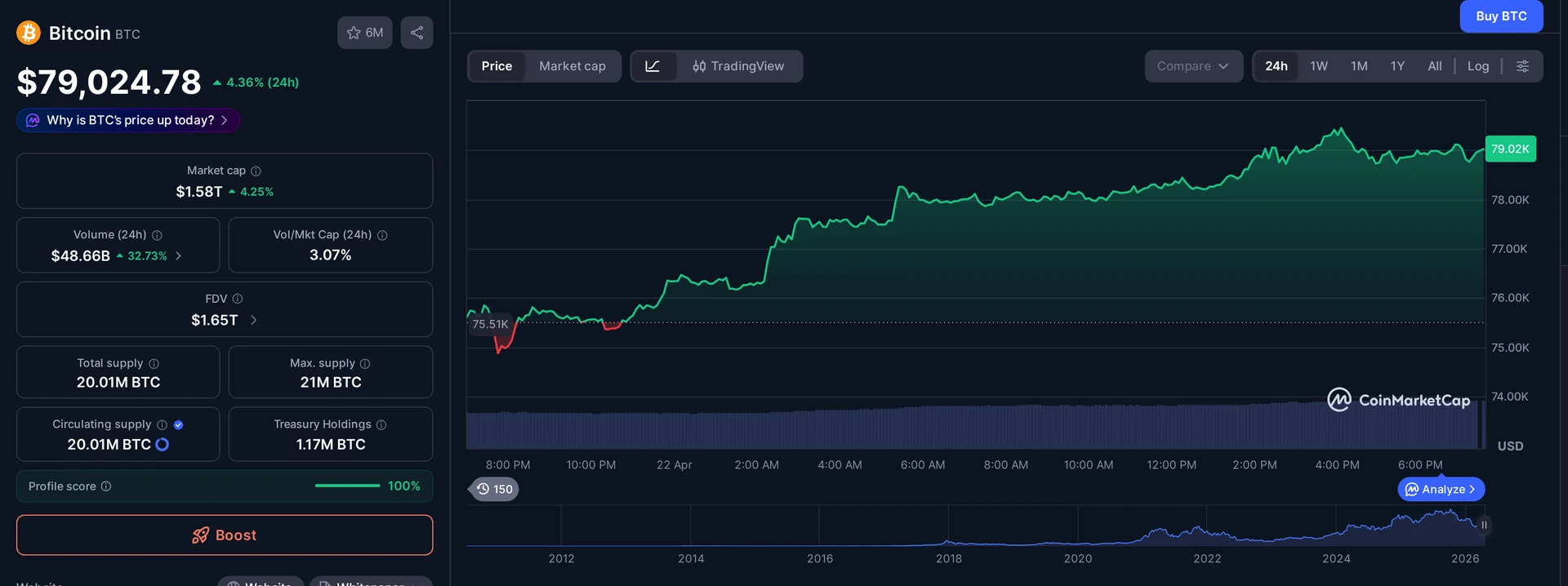
Answer: Bitcoin rallied, and Strategy trades as a high-beta call option on Bitcoin. When spot BTC ran from a weekly open near $76,000 up through $78,500 on Friday morning, MSTR stock did what it always does and went up more, faster. The stock typically tracks the coin at a two-to-four-times multiplier.
The backdrop matters. Traders had watched Strategy trade below its average cost basis for most of the first quarter, with a reported $14.46 billion unrealized loss on digital assets as of Q1. That loss was partially offset by a $2.42 billion deferred tax benefit, but the optics were grim. Then Bitcoin found a bid, Saylor’s team wrote a new ten-figure check, and the narrative flipped inside a week.
The move underscored the company’s leverage to Bitcoin price movements and its continued reliance on preferred stock issuance to fund treasury expansion.
The $2.54 Billion Bitcoin Buy That Restarted the Rally
On April 20, Strategy confirmed it added 34,164 BTC between April 13 and April 19 at an average price of $74,395 per coin. That is the company’s third-largest single purchase on record and its biggest weekly accumulation since November 2024. You can read the full disclosure in Strategy’s bitcoin purchase announcement, which lays out the dates, the average price, and the dollar figure.
Holdings now sit at 815,061 BTC. That figure does something symbolic. It pushes Strategy past BlackRock’s 802,823 BTC, the stack held inside the asset manager’s spot Bitcoin ETF products, and hands Michael Saylor the crown as the largest corporate bitcoin holder on the planet. Cumulative cost basis across the whole stack now stands near $61.56 billion, with an average purchase price of $75,527 per coin.
Context on the pace: the week before, between April 6 and April 12, Strategy had already closed a $1 billion purchase of 13,927 BTC funded entirely out of STRC proceeds. Stack that against the latest buy and the two-week accumulation total lands near 48,091 BTC. One of the most aggressive fortnights of buying in the company’s history, and it ran straight into a spot market that was already tightening.
- 34,164 BTC purchased between April 13 and April 19
- Average price: $74,395 per coin
- Total outlay: $2.54 billion
- Prior week’s buy: 13,927 BTC for $1 billion
- Two-week total added: roughly 48,091 BTC
How Strategy Actually Paid For the Bitcoin
Here is where the story gets technical, and where the equity story separates from the Bitcoin story. Of the $2.54 billion Strategy raised, roughly $2.18 billion came from selling 21,795,389 shares of STRC, the Variable Rate Series A Perpetual Stretch Preferred Stock. Only $366 million came from selling 2,165,000 shares of MSTR Class A common stock, per Strategy’s 8-K filing, which means preferred issuance covered about 86% of the full financing mix.
That ratio is the whole point. For most of 2024 and 2025, Strategy leaned on common share sales through its at-the-market program, and every new buy came with dilution math that MSTR holders eventually priced in. STRC changed the equation. The preferred instrument carries an annualized dividend rate of 11.50% for April 2026, the first month at that level without an increase after seven consecutive monthly hikes since the stock’s July 2025 IPO. The April 30 dividend pays $0.958333 per share.
Liquidity has followed the strategy. STRC posted a $1.156 billion single-day trading volume on April 13, a record for the instrument. Management also proposed shifting STRC dividend payments from monthly to semi-monthly, a structural tweak aimed at tightening reinvestment cycles for the income crowd that actually buys this paper. Remaining STRC capacity sits at $19.46 billion, with another $26.73 billion still available under the MSTR common offering program.
STRC accounted for roughly 86% of the financing, reflecting Strategy’s stated pivot away from common equity dilution.
What Bitcoin’s Move Above $78,000 Really Means
Bitcoin crossed $78,500 on Friday morning, up from a weekly open near $76,000 and capping a recovery that started the prior week. That put the coin 11.1% above its price one month earlier and marked the highest level since early February. Yahoo Finance’s market recap noted bitcoin price clearing $78,000 as the geopolitical ceasefire held through the Friday close, steadying risk assets across the board.
For Strategy holders, the $78,000 handle is not arbitrary. It sits above the company’s $75,527 average cost basis, which means for the first time in months the treasury is back in the green on paper. That matters for two reasons. First, the unrealized loss line that dragged Q1 earnings starts to reverse. Second, it weakens the bearish thesis that Saylor is buying into a structural downtrend, a claim that got loud while BTC spent weeks trading below the firm’s cost average.
None of this makes MSTR a cheap stock. The market cap premium over the implied value of the underlying Bitcoin stack, often called mNAV, keeps traders arguing. Bulls point to optionality, future buys, and the STRC financing machine. Bears point to dilution risk and the fact that a 30% BTC drawdown does very ugly things to a used Bitcoin treasury company carrying billions in preferred obligations.
The Numbers Behind Strategy’s 2026 Accumulation Run
Zooming out past this week, Strategy’s 2026 buying pace has been relentless. In March the company acquired 22,337 BTC for $1.57 billion, then added another 1,031 BTC on March 23. Add in the two April buys and the first-quarter-plus tally clears 71,459 BTC in fresh accumulation, all while the market spent most of that stretch questioning whether the model still worked.
The answer, at least for now, is that it does. Barely, and only because STRC absorbed the financing burden that common equity would have choked on. Strip out the preferred stock pipeline and Strategy’s treasury expansion looks a lot more fragile. Keep STRC in the picture and the firm has runway to buy at least another $19 billion worth of BTC without touching common shareholders, assuming demand for the preferred holds up.
- March 2026: 22,337 BTC for $1.57 billion
- March 23, 2026: 1,031 BTC added
- April 6 to April 12: 13,927 BTC for $1 billion
- April 13 to April 19: 34,164 BTC for $2.54 billion
- Total holdings: 815,061 BTC at average cost $75,527
What Happens If Bitcoin Stalls From Here?
That is the question every MSTR trader should be asking on Monday. If Bitcoin consolidates between $75,000 and $80,000, Strategy’s equation stays workable: dividends get paid, STRC demand stays sticky, and the next buy funds itself. If BTC rolls back under $70,000, the preferred market tends to notice fast, and the cost of every subsequent raise climbs. That is the scenario nobody at the company will publicly game out.
For now, the tape is doing the talking. Strategy went from a $119 closing low to a $166.52 close in fifteen trading days. Bitcoin ripped 11% in a month. The treasury crossed BlackRock. And the preferred stock that everyone wrote off as too complicated to matter just funded the largest weekly Bitcoin buy this company has made in almost eighteen months. Call that a pivot. Call it vindication. Either way, Saylor is not slowing down.
Frequently Asked Questions
Why did Strategy MSTR stock surge 25% this week?
Strategy MSTR stock jumped roughly 25% across five trading sessions because Bitcoin price recovered above $78,000 and the company disclosed a $2.54 billion purchase of 34,164 BTC. Shares climbed from a $119 April 2 low to $166.52 on April 17, with an 11.8% single-day move on above-average volume.
How much Bitcoin does Strategy now hold?
Strategy now holds 815,061 BTC after its April 20 disclosure of a 34,164 BTC purchase. That stack surpasses BlackRock’s 802,823 BTC held through spot Bitcoin ETF products, making Strategy the single largest corporate holder of Bitcoin. Cumulative cost basis stands near $61.56 billion, at an average purchase price of $75,527 per coin.
How did Strategy fund the $2.54 billion Bitcoin purchase?
Strategy raised the $2.54 billion mostly through STRC preferred stock, not common shares. About $2.18 billion, or roughly 86% of the total, came from selling 21,795,389 STRC shares. Only $366 million came from selling 2,165,000 MSTR Class A common shares, reflecting the firm’s stated pivot away from common equity dilution.
What is STRC and why does it matter for MSTR investors?
STRC is Strategy’s Variable Rate Series A Perpetual Stretch Preferred Stock, which carries an 11.50% annualized dividend for April 2026. It matters because STRC now funds most Bitcoin purchases, shielding common MSTR shareholders from dilution. Strategy retains $19.46 billion of STRC capacity and posted a record $1.156 billion single-day volume on April 13.
This article is for informational purposes only and does not constitute investment advice. Every investment and trading decision involves risk. Readers should conduct their own research before making any financial decisions.


















25% in five sessions is wild but the 34,164 BTC add at an average near $74k is what actually matters for their cost basis. Anyone know if this was funded via the ATM or more converts?
feels like we’ve seen this movie before. MSTR rips ahead of spot, retail piles in at the top, then BTC coughs 8% and the premium to NAV collapses overnight
calling it now, $85k by Friday
Been stacking since the 2017 run and Saylor’s conviction through that drawdown is why I still hold MSTR alongside spot. The 2022 lows when people called him reckless at $17k average look pretty different today, though the leverage risk is still real if we get another 70% drawdown.
curious what everyone thinks about the mNAV premium here. is 2.1x still defensible when you can just buy IBIT with zero corporate overhead, or is the convertible arb flywheel actually worth the markup?