








































What to Know
- Tether Investments proposed merging Twenty-One Capital, Strike, and Elektron Energy into a single public Bitcoin company on April 30, 2026
- Twenty-One Capital holds over $3.3 billion in Bitcoin, ranking second among public companies globally
- Strike has locked in a $2.1 billion credit facility to fund Bitcoin lending at any order size
- Elektron Energy has mined more than 5,500 Bitcoin at all-in production costs below $60,000 per coin
The Twenty-One Capital Strike Elektron merger proposal, announced by Tether Investments on Wednesday, could reshape how publicly traded companies hold and use Bitcoin. Three separate operations, a treasury firm, a financial services platform, and a mining company, would fold into one listed entity that Tether is calling ‘the premier listed Bitcoin company in the world.’ If it closes, this is not just a deal. It is a blueprint for what corporate Bitcoin accumulation looks like at scale.
What Is Tether Proposing and Why Now?
Tether Investments, the investment arm of stablecoin issuer Tether, put forward plans on Wednesday to combine Twenty-One Capital, Strike, and Elektron Energy under a single publicly traded roof. The announcement came during the Bitcoin 2026 conference, a deliberate stage for maximum audience reach among the exact investors and institutions these companies want to attract.
The logic behind the deal is straightforward: Bitcoin treasury companies are competing for capital, and the firms that can show scale, operational depth, and diverse revenue streams will win. A combined entity doing treasury management, consumer financial services, and Bitcoin mining checks all three boxes at once. It is a vertical integration play, framed in Bitcoin-native language.
Jack Mallers, who serves as CEO of both Twenty-One Capital and Strike, made his view clear at the conference. ‘Simply put, I think it’s a great idea,’ he said, according to statements given at the event. For Mallers, who has spent years building Strike into a global payments platform, folding it into a public vehicle with Twenty-One’s balance sheet gives Strike a path to institutional capital it did not previously have.
Twenty-One Capital already has the public market presence. The company completed its SPAC merger with Cantor Equity Partners in December 2025, becoming a listed company with Tether as one of its most prominent backers. That prior backing sets up Tether as the natural architect of the next expansion step.
The proposed leadership structure is intended to combine Mallers’ product, brand, and consumer Bitcoin leadership with Zagury’s capital markets, operating, and execution experience.
How Does the Twenty-One Capital Strike Elektron Merger Work?
The Twenty-One Capital Strike Elektron merger would bring together three distinct operations, each contributing something the others lack. Twenty-One Capital brings the balance sheet. As of the announcement, it holds over $3.3 billion worth of Bitcoin, making it the second-largest public company by BTC holdings globally. That kind of treasury weight gives any merger partner immediate credibility with institutional investors.
Strike handles the consumer and lending side. The platform operates in more than 100 countries, letting users buy, sell, hold, send, and borrow against Bitcoin. It is not a speculative token platform, it is infrastructure built around Bitcoin as money. The recently announced $2.1 billion credit facility is what makes this piece especially interesting. That is real lending capacity, not a projection.
Elektron Energy fills the production gap. The mining company, led by Raphael Zagury, has built a portfolio that has produced more than 5,500 Bitcoin in total. The headline number on costs is equally important: all-in production costs sit below $60,000 per Bitcoin. That margin, at current prices, means the mining operation generates profit, not just coins.
Zagury is recommended by Tether to serve as president of the combined company. That structure puts Mallers in the consumer-facing CEO role while Zagury manages the capital markets and operational side. Whether that split works in practice depends on execution, but the division of responsibilities at least makes sense on paper.
Twenty-One put out a formal press release late Wednesday acknowledging the plans, which means this is not a rumor. It is a disclosed strategic direction, even if the merger documents are not yet final.
Strike’s $2.1 Billion Credit Facility Is the Real Story
The merger headline grabbed attention, but the Strike 2.1 billion Bitcoin credit facility deserves its own close read. Mallers announced at the Bitcoin 2026 conference that Strike has secured $2.1 billion in credit capacity, specifically to meet lending demand at any order size. That phrase, ‘at any order size’, signals that Strike is targeting institutional clients, not just retail users sending $50 to a friend.
Bitcoin-backed lending is one of the fastest-growing segments in the broader digital asset space right now. Holders who do not want to sell their Bitcoin but need liquidity are borrowing against it. If Strike can deploy $2.1 billion into that market through a publicly traded entity with Twenty-One’s balance sheet behind it, the revenue story changes dramatically from a consumer app to a financial services company with institutional reach.
This is the piece that most market coverage underplays. The merger is not just about accumulating more Bitcoin. It is about monetizing Bitcoin holdings without selling them, a model that has a direct analogy in traditional finance and one that institutional investors already understand. That familiarity matters when you are trying to attract pension funds and family offices.
XXI shares jumped in after-market trading following the Wednesday announcement. The stock pared most of those gains by Thursday and was recently trading at $8.06, up roughly 3% from Wednesday’s close. The market’s muted follow-through might simply reflect that the merger is not yet done, it is a proposal, not a signed agreement.
What Does the Deal Mean for Bitcoin Investors?
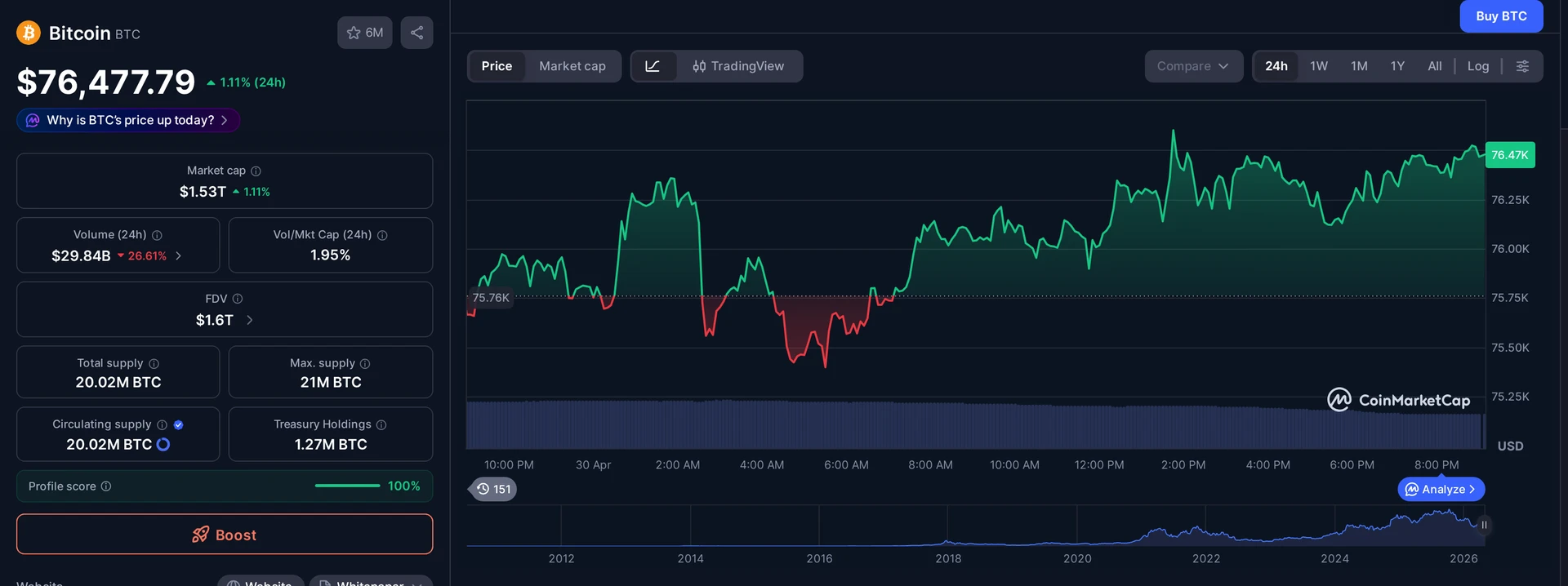
If this merger closes, it creates a single public company with Bitcoin treasury operations, global consumer financial services, and in-house mining capacity, all under one ticker. For retail investors who want Bitcoin exposure through equity markets, that is a more complete product than holding a pure treasury company like MicroStrategy or a pure miner like Marathon Digital.
The Elektron Energy 5500 Bitcoin below $60000 production cost data point matters here too. A mining arm with sub-$60,000 all-in costs provides a natural hedge inside the combined company. When Bitcoin prices rise, the treasury and lending businesses benefit. The mining operation benefits at almost any price above production cost. That diversification across Bitcoin’s value chain is exactly what a certain class of equity investor looks for.
There is a cynical read on all of this too. SPAC mergers have a mixed reputation. Twenty-One only went public via SPAC in December 2025, barely five months ago. Now Tether is proposing to bolt on two more companies before the original combination has had time to prove itself as a public entity. The speed raises a fair question: is this genuine long-term strategy, or is it deal-making while Bitcoin prices and investor appetite are both favorable?
Mallers has built real products. Strike works. The 100-country footprint is not a press release claim, it is operational infrastructure. Zagury’s mining numbers are verifiable. The people involved have credibility. But the structure of this deal, announced at a conference, pushed by the original backer, with shares moving in after-hours trading, has all the hallmarks of Bitcoin maximalism meeting Wall Street deal momentum. Whether that combination creates lasting value or becomes a cautionary tale depends on whether the integration actually happens and whether the merged company can generate returns that justify its ambition.
The market will be watching the next formal filing. Until then, the proposal sits somewhere between a vision and a plan.
Simply put, I think it’s a great idea.
Frequently Asked Questions
What is the Twenty-One Capital Strike Elektron merger?
Tether Investments proposed combining Twenty-One Capital, Strike, and Elektron Energy into a single publicly traded Bitcoin company. The deal would unite a Bitcoin treasury firm, a global payments platform operating in over 100 countries, and a Bitcoin mining operation under one listed entity on public markets.
How much Bitcoin does Twenty-One Capital hold?
Twenty-One Capital holds over $3.3 billion worth of Bitcoin, making it the second-largest public company globally by BTC holdings. It went public through a SPAC merger with Cantor Equity Partners in December 2025, with Tether as one of its key backers.
What is Strike's $2.1 billion credit facility?
Strike secured a $2.1 billion credit facility to fund Bitcoin-backed lending, announced by CEO Jack Mallers at the Bitcoin 2026 conference. The facility is designed to meet lending demand at any order size, targeting institutional clients who want liquidity without selling their Bitcoin holdings.
What does Elektron Energy bring to the merger?
Elektron Energy is a Bitcoin mining company led by Raphael Zagury. It has mined more than 5,500 Bitcoin across its managed portfolio with all-in production costs below $60,000 per Bitcoin. Zagury is recommended to serve as president of the combined entity after the merger closes.
This article is for informational purposes only and does not constitute investment advice. Every investment and trading decision involves risk. Readers should conduct their own research before making any financial decisions.







anyone know the share ratio Tether Investments is offering on the Elektron side? the press release talks about a listed Bitcoin company but the actual treasury structure isnt clear from this writeup.
calling it the world’s premier listed Bitcoin company before the merger even closes feels like marketing copy more than reality. Strike has retail rails, Twenty-One has the BTC stack, Elektron is the listing vehicle. fine. but Tether pushing the deal also means Tether sets the terms, and that part nobody is questioning hard enough yet.
April 30 announcement, classic end of month deal flow timing.
saw similar treasury company plays back in 2021 with the SPAC wave and most of them traded at deep discounts to NAV within a year. curious if this one structures custody differently or if it ends up the same story.